
Crystal Bracelet Guides
Crystal Bracelet vs Crystal Necklace: Which Jewelry Format Is Right?

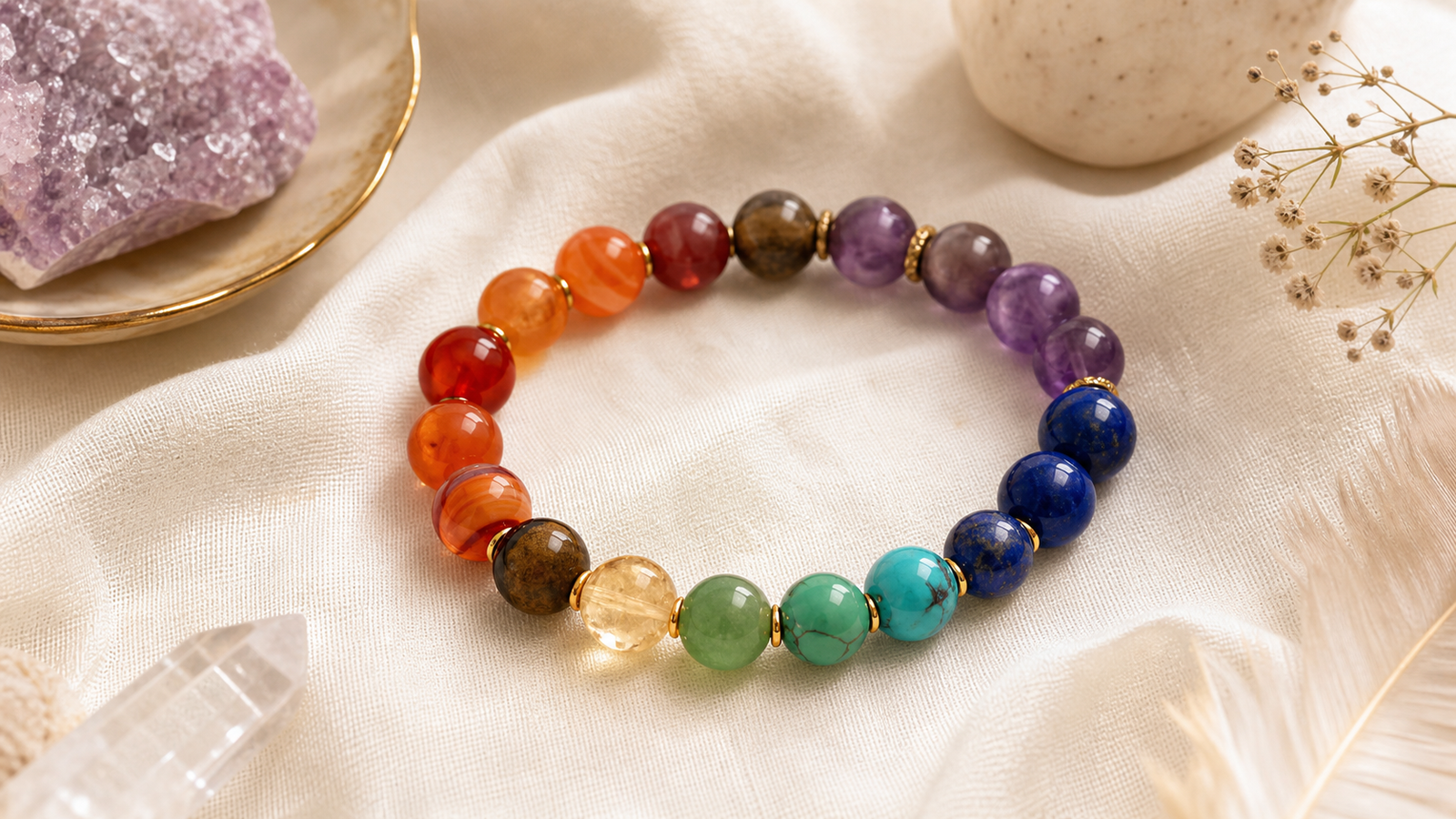
Crystal bracelet vs crystal necklace: choose the format that fits how the wearer moves, dresses, and cares for jewelry. A bracelet keeps gemstone color in view during ordinary tasks and can become a small tactile reminder. A necklace places the focal point near the face or neckline and leaves the wrist free. Neither format is inherently more powerful, meaningful, or valuable. This guide compares fit, comfort, construction, material transparency, gifting, and customization so you can decide from practical evidence instead of a universal rule. Audday makes handmade natural-stone bracelets and uses crystal symbolism as personal expression, not a promise of healing or protection.
The short answer: start with the wearer’s routine
Choose a bracelet if the wearer likes visible jewelry on the wrist, often stacks pieces, and is comfortable removing it for water or rough work. Choose a necklace if they prefer a central outfit accent, dislike weight or movement around the wrist, or want a pendant that may sit under clothing. If both sound suitable, decide which piece will be worn more days of the week. That question is more useful than asking whether bracelets or necklaces are generally “better.” A lovely piece that stays in a drawer has not met its purpose.
Try an ordinary-day test before ordering. Imagine getting dressed, commuting, typing, cooking, carrying a bag, washing hands, and changing clothes. A bracelet can rub against a desk or watch; a necklace can catch in a scarf, collar, or long hair. Neither issue rules a format out, but it affects the scale and hardware you should choose. A maker should be able to explain these tradeoffs rather than treating a product photo as proof of comfort.
Visibility, touch, and personal meaning
A bracelet is often visible to its wearer. Someone may appreciate seeing a chosen color while journaling or reaching for a cup of tea. A necklace is usually more visible to other people when worn over clothing, yet it can be more private when tucked beneath a shirt. Those differences can shape how a symbolic gift feels. Ask the recipient whether they prefer a visible reminder or a quieter keepsake. Do not assume that a stone’s traditional meaning matches their own story.
At Audday, an energy reading can offer a reflective design prompt, but the person wearing the jewelry decides what, if anything, it symbolizes. Natural gemstones have physical properties and visual character; they do not guarantee emotional, medical, financial, or protective outcomes. This boundary matters in a comparison article because claims about a bracelet being “closer to energy” or a necklace being “closer to the heart” are personal metaphors, not measurable advantages. Fit and material quality are more dependable buying criteria.
Bracelet fit is more than wrist circumference
Measure the wrist where the bracelet will sit and compare the number with a bracelet the wearer already likes. Round beads occupy space on the inside of a loop, so a strand of large beads can feel tighter than a flat chain of the same measured outer length. The design also needs enough ease for movement without sliding over the hand. A snug fit may look neat but feel restrictive during a warm day; a loose fit may shift, knock against surfaces, or twist the focal stone to the underside.
Stretch cord, adjustable cord, and a clasp each change the experience. Stretch makes a simple strand easy to put on, but it needs careful knotting and eventual restringing. Adjustable cord accommodates a range of wrist sizes but may have loose ends. A clasp can give a polished finish yet requires dexterity and secure hardware. Ask what the wearer can comfortably fasten, not only which finish looks best in a close-up photograph. Audday’s custom bracelet service lets the brief include wrist size, bead diameter, preferred construction, and routine before assembly.
Necklace length and pendant behavior
A necklace has a different set of fit questions: neck circumference, chain length, neckline, pendant drop, and total weight. A short necklace may sit neatly with an open collar but disappear beneath a high neckline. A long pendant can swing when the wearer bends and may hit a desk or countertop. Hair can catch in a rough chain or clasp. The right length is not merely a style chart entry; it depends on the clothing and activities around the piece.
Before buying a necklace as a gift, inspect one the recipient already wears. Note where it rests and whether they choose a delicate chain, a bead strand, or a focal pendant. If they rarely wear necklaces, do not assume a dramatic pendant will create a new habit. If they love one particular chain length, that is a useful clue, though a heavier gemstone focal point may change how a similar length hangs. For coordinated custom work, ask about the final pendant dimensions and metal choice rather than assuming a bracelet bead can be converted without redesign.
How natural stones read in each format
A bracelet can repeat small natural stones around the wrist, giving pattern and rhythm to color variation. A necklace can frame one stone near the face or distribute beads across a longer visible line. A transparent or lightly colored bead may appear subtle in a narrow bracelet, while the same material in a larger pendant becomes the whole outfit’s focal point. Opaque stones with bands or inclusions may reward a closer look on the wrist. Neither effect is superior; it depends on what the wearer likes to notice.
Natural materials are not uniformly colored. If the design must match a particular garment, ask for photos of the current bead lot or the actual stone. Check whether a material is natural, dyed, treated, stabilized, coated, or lab-created. Two pieces can share a color name without sharing the same stone or care requirements. Audday’s gemstone material analysis is a starting point for understanding variation and asking better questions. Precise material language protects the buyer better than a vague promise of “healing crystal energy.”
Construction and maintenance side by side
Bracelets usually encounter more direct contact with tables, sleeves, bags, and handwashing. A bead strand therefore needs sound cord, smooth drilling edges, and a secure knot or clasp. Necklaces are less likely to hit a desk during typing, but chains can snag, pendants can swing, and perfume or hair products may contact the material. Both formats should be removed when exposure to water, chemicals, impact, or strenuous movement could damage the construction. Care depends on the actual stone and hardware, not on whether it sits on the wrist or neck.
Ask a seller whether the item can be repaired. Can an elastic bracelet be restrung with the same beads? Can a clasp be replaced? Can a necklace chain be changed without damaging the pendant? Keep the material list and a photograph of the original arrangement. Repairability matters because even careful jewelry experiences wear. A piece designed to be maintained is a stronger long-term purchase than one described as “forever” without a realistic service plan.
Comfort at work, during travel, and at home
For desk work, a bracelet may be a pleasant visual cue but can press against a keyboard edge. A slim strand or wearing it on the non-dominant wrist may help; some people simply prefer a necklace. For active hand work, a bracelet should be removed where it could catch, contaminate, or break. A necklace may also need removal around machinery or tasks where a chain could snag. Follow workplace safety rules instead of assuming any jewelry format is safe in every environment.
When traveling, a bracelet can be easy to pack in a small pouch, but a loose elastic strand may tangle with other accessories or be stretched by hurried removal. A necklace needs a separate chain compartment or a way to keep the chain from knotting. Photograph valuable or sentimental pieces before travel and carry material notes if a repair would be difficult away from home. For an everyday item, choose a level of care the wearer is actually willing to follow.
Styling with watches, sleeves, and necklines
A bracelet can add color beside a watch, but the watch case and stone should not repeatedly grind against one another. Leave a little space, choose bead scale to match the watch, or place the bracelet on the other wrist. Long sleeves may hide a subtle strand; short sleeves make it more prominent. Stacking several bracelets changes weight and sound, so try the combination rather than assuming every extra strand improves it.
A necklace interacts with the shape of a neckline. A small pendant can sit well with an open collar; a longer chain may be better over a simple top. A complex patterned shirt often needs a quieter necklace. If the recipient already wears earrings or a statement ring, decide where the eye should go. Both bracelet and necklace can be striking, but giving each piece a clear role prevents the outfit from feeling crowded. A useful test is to style the candidate piece with three real outfits instead of only the retailer’s photograph.
Comparing a gift when the recipient cannot try it on
For a gift, look at what the person already wears before guessing. If their wrist is usually bare but they repeatedly wear pendant necklaces, the necklace is probably safer. If they have a familiar watch stack and rarely wear neck chains, choose a bracelet sized from an existing favorite. Ask about metal sensitivities, preferred colors, and whether they are comfortable with a detachable charm. A surprise should not depend on ignoring practical needs.
Include a short note about the material and the reason you selected the color. Keep the meaning open: “I chose this because it reminded me of our trip” is kinder than telling someone a stone will fix their stress. Confirm the seller’s size-adjustment, exchange, and repair terms in advance. A custom design may take longer than an in-stock piece, so establish the date needed and ask about the production timeline before payment. Never promise a delivery date based on another company’s holiday calendar.
Cost, value, and what to compare fairly
A price comparison should include more than format. A bracelet with many natural beads may use more stone material than a small pendant, while a necklace may include a more expensive chain or setting. Compare stone identification, treatment disclosures, metal type, construction, finish, and aftercare. A high price does not prove that a crystal is rare or that its symbolism is more effective. An unusually low price may reflect different materials or production methods, but you need evidence before judging it.
When reviewing two product listings, ask for bead diameter or pendant dimensions, finished length, cord or chain material, clasp details, care instructions, and clear photographs. Check whether the item pictured is the exact piece or a representative sample. Natural variation means the delivered color may differ from a stock image. Audday’s handmade approach aims to make these choices visible so a customer can decide which detail matters most instead of paying for an unexplained label.
When a coordinated set makes sense
A bracelet and necklace can tell one story without being identical. One shared stone, repeated color, or consistent metal finish is enough to connect them. The bracelet may use smaller beads for comfort, while the necklace has one larger focal element. Copying the same bead sequence at two scales can look forced and add unnecessary weight. A coordinated set works best when each item has a different job in the outfit.
Start by deciding which piece the wearer will use most often. Design that one first, then make the other a supporting option. If the set is a gift, confirm both sizes and remember that one piece may be preferred. A flexible exchange or modification path protects the meaning of the gesture. A set is not automatically a better value than a single piece that is worn frequently.
A practical decision framework
- Write down the wearer’s most common activities and clothing.
- Identify whether the jewelry should be visible to the wearer, visible to others, or private.
- Measure a comfortable bracelet or necklace they already own.
- Choose one material and ask for accurate treatment and hardware disclosure.
- Test the proposed scale against movement and care needs.
- Compare repair, exchange, and production details before ordering.
If the answers point in different directions, prioritize comfort. A format can carry a thoughtful story only when it is pleasant enough to wear. For a first Audday design, a custom gemstone bracelet gives us room to review fit, bead scale, palette, and daily use. You can also browse existing bracelet styles to see which proportions appeal to you before asking for a custom version. We focus on bracelets; if a necklace is clearly the better choice for the wearer, say so openly rather than forcing the bracelet sale.
Frequently asked questions
Is a crystal bracelet better than a crystal necklace?
No format is universally better. Choose according to the wearer’s routine, comfort, preferred visibility, and care habits. A bracelet can be a visible wrist reminder; a necklace can create a central outfit focal point.
Which is easier to size as a gift?
Neither should be guessed from appearance. Measure a comfortable piece the recipient already owns. Bracelet bead diameter and necklace pendant drop both affect how the finished item feels.
Can I wear a gemstone bracelet with a watch?
Often, yes, if the fit is comfortable and the stones do not repeatedly rub against the watch case. Try the bracelet on the other wrist or leave space between pieces when needed.
Are natural stones identical in bracelets and necklaces?
No. Individual stones vary in color, inclusions, finish, and treatment. Ask for precise material descriptions and current photographs if a specific match matters.
Do either bracelets or necklaces heal or protect the wearer?
No jewelry format guarantees those outcomes. Audday presents crystal associations as optional personal symbolism, not medical, financial, or protective advice.