
Crystal Bracelet Guides
Fluorite Bracelet Meaning: Color, Focus, and Gentle Care

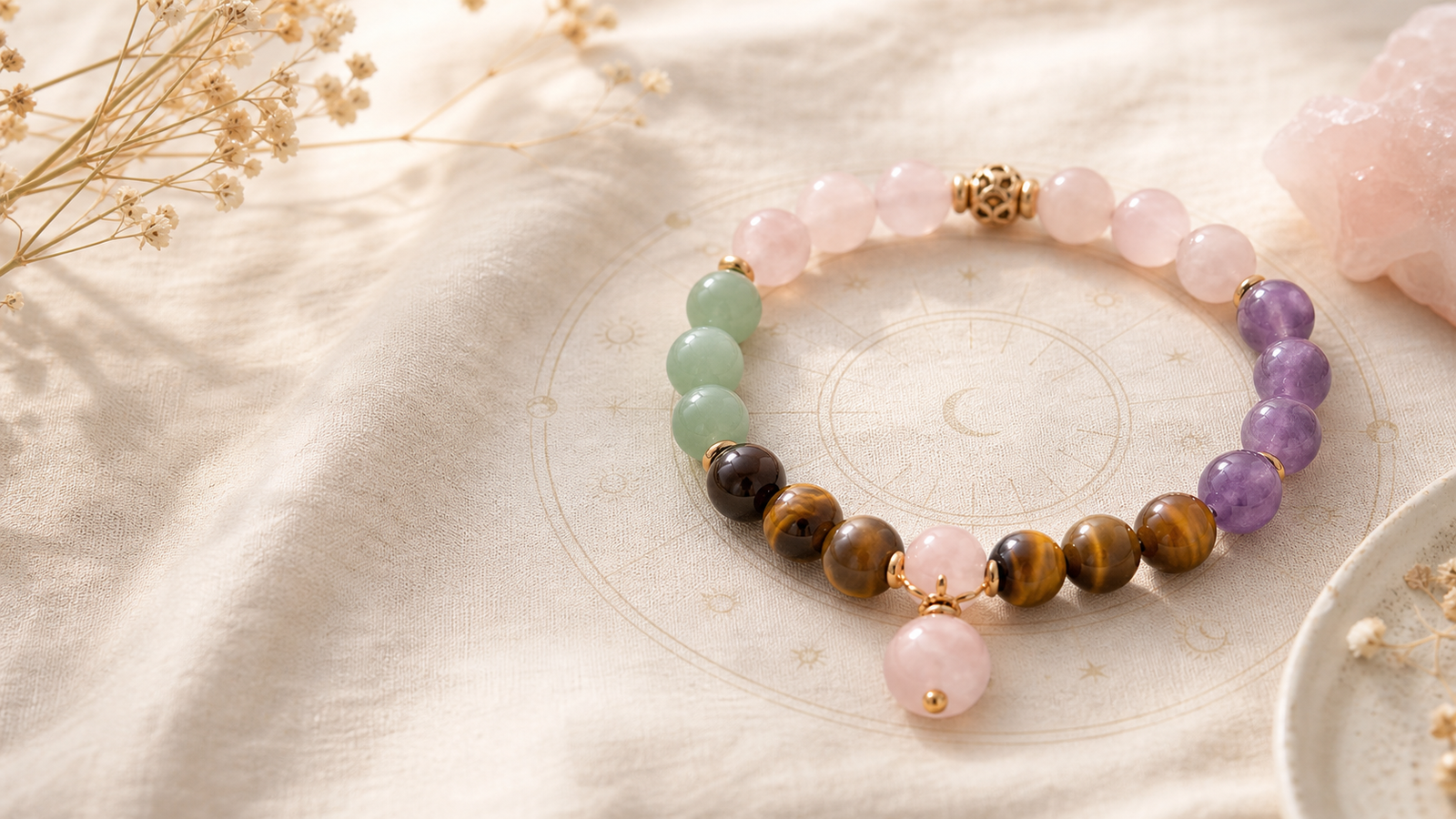
A fluorite bracelet is a natural choice for someone drawn to layered color: a single bead can show soft green, violet, clear, or blue-toned areas rather than one flat shade. When shoppers search for fluorite bracelet meaning, they often want a wearable prompt for focus, clarity, or a fresh creative routine. Those associations are personal design language, not a promise that a gemstone can control a result. Audday treats the natural character of each stone and the wearer’s own story as the starting point for a meaningful bracelet.
What does a fluorite bracelet mean in daily wear?
Fluorite’s shifting colors can make a bracelet feel like a small visual reset before study, planning, or a busy workday. You might choose green for a calm palette, purple for a more expressive accent, or a mixed strand for contrast. Start with Audday’s custom energy interpretation page to turn an occasion or personal intention into a practical color brief. Then create a custom bracelet around a wrist measurement, bead size, and accents you will want to wear repeatedly.
Choose fluorite for color variation, not uniformity
Natural fluorite varies in transparency, saturation, banding, and polish. That variation is part of the appeal, so a handmade strand should be selected for overall harmony rather than identical beads. Audday makers arrange natural gemstones by hand, informed by the colored-gemstone craft tradition of Haifeng, Shanwei, Guangdong. Compare material character on the gemstone material analysis page, or browse the bracelet collection for ready-to-wear palettes before building a custom design.
Gentle fluorite bracelet care
Fluorite deserves a little more caution than a tough everyday bead. Remove it before showering, swimming, exercise, or household cleaning; do not use ultrasonic cleaners or harsh chemicals. Store it separately in a soft pouch to reduce scratches and avoid dropping it on hard surfaces. A careful rotation lets the color remain the focus while protecting the finish.
Frequently asked questions
Can fluorite be worn every day?
It can be worn thoughtfully, but it benefits from protection against impacts, chemicals, and unnecessary moisture.
What colors pair with fluorite?
Clear quartz, soft gray, lavender, dark blue, and muted green can complement its varied natural tones.
Does fluorite guarantee focus?
No. Choose it as a personal reminder or style preference, not a guaranteed outcome.
Practical questions to ask before ordering
A useful article should help a reader make a decision, not only describe a mood. Before ordering, check the exact bead diameter, approximate wrist size, closure or elastic construction, finish, and expected natural variation. If the page is about a gift, confirm the occasion and the recipient’s existing style. If it is about personal intention, decide whether the bracelet will be worn daily, layered occasionally, or kept for a specific ritual. These details affect the best material and proportion more than a dramatic description alone.
Ask how the bracelet should be stored, whether water and chemicals should be avoided, and what to do if elastic becomes loose. A responsible maker should explain that natural stones can show differences from photographs. Those differences can include lighter or darker areas, inclusions, banding, cloudy sections, tiny surface marks, and variations in polish. Such details are part of natural material character. They should be described clearly so the customer knows what to expect.
How to make the design feel intentional
Start with one visual anchor. This may be a focal stone, a repeated color, a metal accent, or a contrast between light and dark beads. Add supporting materials only when they improve the overall rhythm. Too many competing colors can make a bracelet look accidental, while one thoughtful contrast can make the design feel complete. Consider the wearer’s skin tone, wardrobe, watch, rings, and whether they prefer quiet jewelry or expressive stacks.
For a custom order, prepare a short brief with the wearer, wrist measurement, bead size, main color, secondary colors, occasion, intention, budget, and preferred finish. Reference images are useful for mood, but they should not be treated as a promise of an identical copy. A handmade design translates the reference into available natural materials and a comfortable arrangement. Reviewing the brief before production reduces misunderstandings and creates a more transparent experience.
Everyday styling and care
Wear the bracelet where it can be seen without being exposed to unnecessary friction. Leave space between it and a watch or harder metal edge. Roll elastic jewelry gently over the hand rather than pulling one section repeatedly. Remove it before swimming, showering, intense exercise, sleeping, or household cleaning. Wipe the beads with a soft dry cloth and store the piece separately in a pouch or lined box.
Rotate jewelry instead of wearing one elastic strand through every activity. Check for gaps, fraying, weak tension, chipped beads, or a clasp that no longer closes securely. Early inspection can prevent a break and protects the small design decisions that make a handmade bracelet feel personal. If repair or restringing is needed, stop stretching the piece and seek maker or jeweler guidance.
Symbolism without exaggerated promises
Crystal and zodiac symbolism can be meaningful when it is presented as a personal language. A color can remind someone to pause. A birthstone can mark a birthday. A chakra palette can represent a personal reflection practice. A dark stone can become a reminder of boundaries, while a pink or green palette can recall care and connection. None of these associations should be presented as a guaranteed treatment, financial result, or prediction.
The most trustworthy description separates material facts from personal interpretation. Material facts include color, texture, bead size, finish, construction, and care. Interpretation belongs to the wearer and may change over time. This approach respects both the natural stone and the customer’s ability to decide what the bracelet means.
Final buying checklist
- Does the primary color suit the wearer’s wardrobe?
- Is the wrist measurement accurate and comfortable?
- Is the bead size appropriate for daily movement?
- Are natural variations and care needs explained?
- Does the bracelet have a clear construction and finishing description?
- Is the symbolism framed as personal meaning rather than certainty?
- Are the return, delivery, and support details easy to find?
- Would the wearer actually choose to put it on tomorrow?
A meaningful crystal bracelet is ultimately a relationship between material, design, and daily life. Let the stone provide character, let the color carry a story, and let the fit determine whether the piece becomes part of a real routine. Audday’s handmade approach begins with that practical balance and leaves room for the wearer’s own interpretation.
A considered choice lasts longer
Take a moment to compare the bracelet with the way you already dress and move through the day. A design that feels comfortable, proportionate, and easy to care for is more likely to become a genuine everyday companion. Read the material notes, ask for clarification when measurements are uncertain, and choose meaning that feels personal rather than prescribed. Audday treats each handmade piece as a small object of reflection: carefully selected natural stones, balanced color, and a finish intended to be worn often. This considered approach makes the purchase clearer, the gift more thoughtful, and the final bracelet more useful long after the first impression.
Fluorite bracelet meaning starts with observable color
Fluorite bracelet meaning is often described through focus or clarity, but those words work best as a wearer’s private reminder rather than a claim that the mineral changes cognition. Fluorite’s visible appeal is its possible color zoning: green, violet, clear, and blue-toned areas can appear within or across beads. A customer may prefer a single-color direction or a more varied strand. Begin with the color actually shown in the bracelet, then decide whether that palette connects with a personal routine. This approach lets aesthetic preference and symbolism coexist without turning a jewelry choice into medical advice.
When viewing photographs, ask whether they show the exact strand or a representative sample. Color can shift with lighting and camera processing, and natural beads need not match one another perfectly. Some variation can produce a pleasing progression around the wrist; too much unrelated variation can obscure the design brief. Ask the maker how the beads will be ordered and whether a more restrained or more varied layout is available. The question is not whether every bead is “perfect,” but whether the whole bracelet fits the intended visual story.
Discuss material identity and treatment before interpreting pattern
A photograph of striped or translucent beads does not, by itself, establish fluorite identity, treatment history, or the source of every color. Request the stated material name and any known treatment information from the seller. Compare translucency, surface polish, edge condition, and bead-hole finish on the actual piece. The gemstone material analysis guide helps organize these observations. It is not a laboratory certificate; when an expensive or unusual material claim is central to a purchase, ask for appropriate documentation rather than relying on a simple home test.
Fluorite is often chosen because its colors can form a complex but gentle palette. That does not mean a strongly patterned bead belongs in every design. Try the strand next to a watch, a neutral bracelet, or the clothes the recipient wears most. A smaller bead size may let the color read as a quiet line, while a larger bead can reveal more pattern and add weight. If you want one focal bead, consider how it looks after the bracelet rotates. The most useful arrangement is one that remains coherent from several angles.
Turn a focus theme into a real custom brief
If a bracelet is meant to mark a study period, new project, or calmer work routine, write down the exact moment it should recall. A note such as “I want a soft green-and-violet bracelet that reminds me to pause before planning” is more actionable than “a stone that guarantees focus.” Add wrist measurement, bead diameter, preferred looseness, metal preference, and whether the bracelet will be stacked. Audday’s energy reading can serve as an optional reflection prompt; the custom bracelet page turns the idea into physical design choices.
Our handmade approach grew from the colored-gemstone craft environment of Haifeng, Shanwei, Guangdong. We arrange naturally varied beads for visual rhythm while checking cord, hole edges, and fit. A customer should know what material is being represented and should not have to accept exaggerated spiritual promises to appreciate the craft. If a specific bead’s pattern matters to you, explain which feature you want to see prominently and which variations you are comfortable with. That conversation helps a maker build a bracelet that reflects your taste rather than a generic “benefit” chart.
Care based on the finished bracelet
Use a soft dry cloth for routine care and store the bracelet apart from harder metal or gemstone pieces that may rub its polish. Keep it away from prolonged water exposure, harsh cleaners, direct heat, and repeated impacts. If a bead looks chipped or the cord is stretched, pause wearing it and ask a maker whether repair is appropriate. The overall care decision must include the elastic, clasp, metal spacers, and any coatings, not just the named mineral. A beautiful natural-stone piece is still a physical object that needs ordinary maintenance.
For a gift, include the disclosed stone name, a brief care note, and the reason you selected the palette. Let the recipient decide whether the symbolism fits them. A personal meaning can grow from the memory attached to the bracelet; it does not need to be presented as a guaranteed physical or emotional effect.