

Crystal Bracelet Guides
How to Clean a Crystal Bracelet After Sweat: Gentle Everyday Care

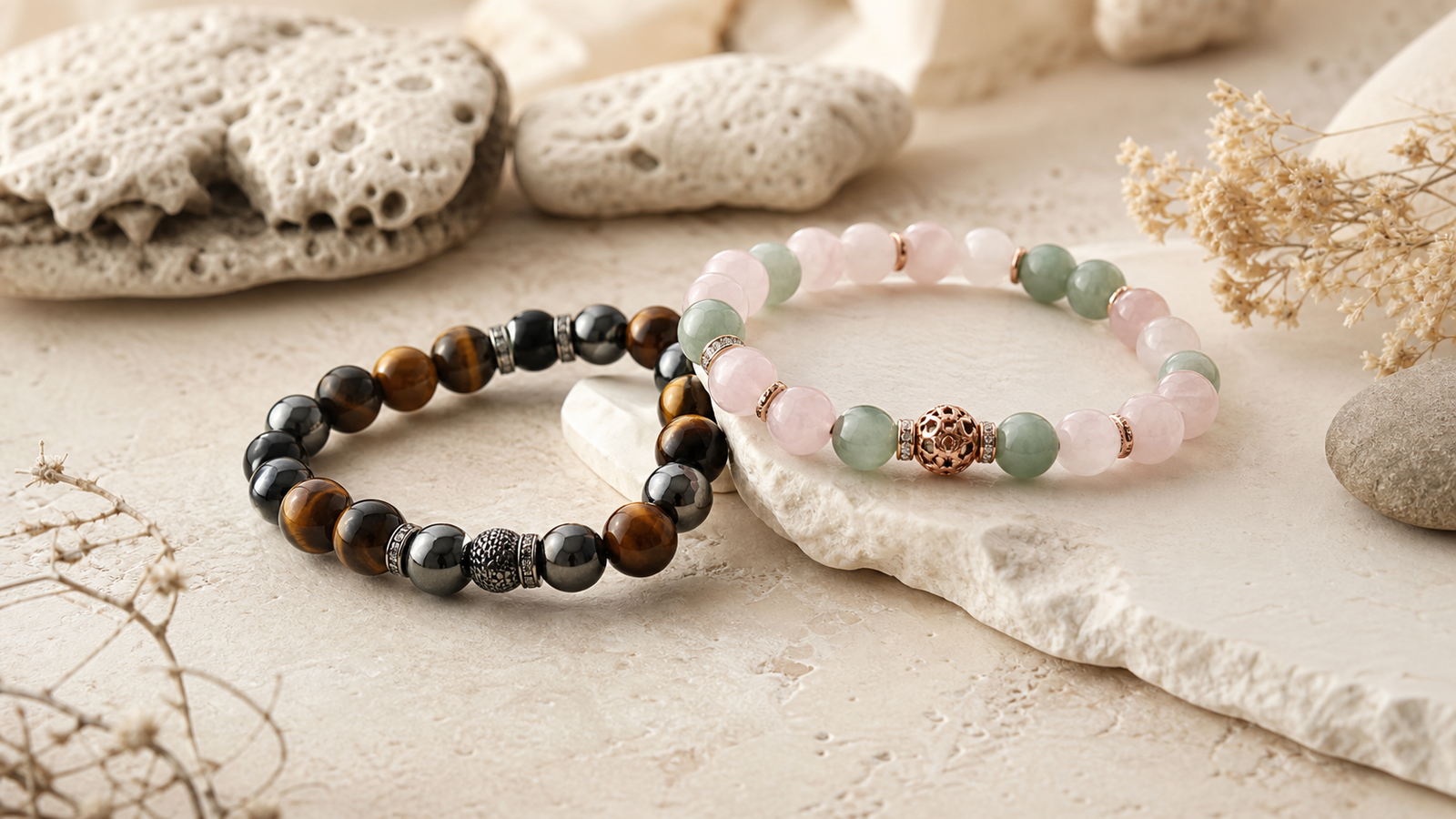
How to Clean a Crystal Bracelet After Sweat: Gentle Everyday Care
Sweat, sunscreen, and daily movement can leave residue on a crystal bracelet and gradually affect elastic, clasps, metal accents, or polished surfaces. A gentle cleaning routine keeps natural gemstone jewelry comfortable without overexposing it to water or chemicals. The safest habit is to remove the bracelet before intense exercise, then wipe it after wear and let it dry completely.
Inspect the bracelet first
Check for frayed elastic, gaps between beads, loose accents, chips, or a clasp that no longer closes smoothly. Do not stretch the strand widely while cleaning. If the cord feels weak, stop wearing it until it can be restrung. Audday’s custom bracelet service can help plan a secure replacement or a better fit.
Use a soft, low-moisture method
Start with a dry microfiber or cotton cloth. If residue remains, lightly dampen one corner with clean water, wipe the beads gently, and dry them immediately. Avoid alcohol, bleach, vinegar, salt scrubs, abrasive cleaners, ultrasonic devices, prolonged soaking, and strong heat. Natural stones vary in hardness, porosity, polish, and treatment, so consult the gemstone material analysis before using anything stronger.
Prevent future buildup
Remove the bracelet before workouts, swimming, showering, sleep, and household cleaning. Apply sunscreen and fragrance before putting jewelry on, then wipe the bracelet after a hot day. Store it in a soft pouch away from keys, watches, and harder stones. For a fresh everyday design, use the energy interpretation page as a personal color prompt and browse the bracelet collection.
Frequently asked questions
Can I rinse a sweaty bracelet under running water?
It is safer to use a barely damp cloth, especially for elastic, porous, delicate, or treated stones.
What if the bracelet smells after exercise?
Wipe it gently, let it air-dry fully, and avoid fragrances or harsh cleaners that may affect the material.
When should it be restrung?
Consider restringing when you see fraying, weak tension, gaps, or repeated stretching.
Start with a realistic care routine
A crystal bracelet worn in warm weather, during commuting, or after a workout can collect perspiration, sunscreen, dust, and ordinary skin oils. Cleaning after sweat does not need to be complicated. The goal is to remove surface residue without soaking elastic cord, weakening knots, or exposing a natural stone to a product it cannot tolerate. Before cleaning, remove the bracelet and check whether the beads, clasp, spacer, and cord look secure. If the bracelet is already loose, cracked, or frayed, cleaning is not the first priority; stop wearing it and ask a jeweler or the maker about repair. A calm inspection prevents a small maintenance task from becoming a broken bracelet.
Why sweat care matters
Perspiration is mostly water, but it also contains salts and other compounds that can dry on a surface. Repeated residue can make polished beads look dull, leave a tacky feeling, or collect around metal findings. Fragrance, body lotion, and sunscreen can add another film. None of this means a bracelet is unsafe or ruined. It simply means that regular, gentle care keeps the materials comfortable and attractive. A short wipe after use is usually better than an occasional aggressive wash. Audday recommends treating natural gemstone jewelry as a wearable object with individual material characteristics, not as a waterproof gadget.
The safest first step: a dry wipe
Use a clean, soft, lint-free cloth. Microfiber, cotton flannel, or a jewelry polishing cloth made for delicate surfaces can work when used lightly. Hold the bracelet in your palm rather than pulling it by the elastic. Wipe each bead once or twice, turning the strand slowly so the cloth reaches the spaces between beads. Pay attention to the area that touches the wrist and to metal spacers where residue can settle. Do not rub hard to chase every mark; pressure can create friction on softer stones or stretch the cord. Finish by placing the bracelet on a dry towel for a few minutes before storing it.
When a slightly damp cloth is appropriate
If a dry cloth cannot remove visible sweat residue, dampen a second soft cloth with clean, lukewarm water and wring it until it is almost dry. Wipe the beads in small sections, then immediately follow with a dry cloth. Avoid holding the whole bracelet under a tap. A nearly dry cloth controls the amount of water and makes it less likely that moisture will travel into a knot, clasp, or porous surface. This method is suitable as a conservative starting point for many polished stones, but the exact material still matters. If you do not know what a bead is made from, use the dry method and ask before using more moisture.
Materials that need extra caution
Some natural stones are porous, soft, layered, dyed, heat-treated, or finished with a coating. Others may react poorly to prolonged water, salt, acids, alcohol, or household cleaners. Metal findings can also tarnish or discolor when exposed to chlorine, perfume, or strong detergents. A responsible care plan therefore begins with material disclosure. Audday’s Gemstone Material Analysis explains why appearance and durability vary across natural materials. When a product description identifies the stones and finish, follow the maker’s specific directions. If it does not, choose the least invasive method and avoid experiments.
What not to use
Do not use bleach, disinfectant, window cleaner, toothpaste, baking soda paste, abrasive powder, acetone, or essential oils as a shortcut. These products can scratch a surface, remove a finish, fade dye, attack metal, or dry out elastic. Ultrasonic cleaners and steam cleaners are also poor defaults for an unknown mixed-stone bracelet. A method that works for solid gold may be unsuitable for porous gemstone beads. Avoid alcohol wipes unless the maker confirms that the stone, coating, and findings tolerate them. A bracelet is small, so aggressive cleaning rarely saves much time and can create damage that is difficult to reverse.
Drying and storing after sweat
After wiping, lay the bracelet flat on a clean towel away from direct sunlight, heaters, hair dryers, and radiators. Allow the cord and any hidden crevices to dry naturally. Do not hang a wet stretch bracelet from a hook because gravity can lengthen the elastic. Once dry, store it in a soft pouch or separate compartment so hard beads and metal jewelry do not rub against one another. Keep it away from bathrooms and humid windowsills when possible. A stable, dry environment reduces odor, tarnish, and unnecessary tension. If you stack several bracelets, place a soft divider between different surfaces.
Sweat, exercise, and daily routines
For intense exercise, swimming, sauna visits, gardening, or work that involves repeated hand washing, remove the bracelet before the activity. Chlorinated and salt water can be especially demanding, while heat can affect finishes and stretch materials. If removal is not practical, choose a simple design with clearly disclosed materials and accept that it may need more frequent inspection. Do not promise that any crystal bracelet is waterproof unless the construction and materials are specifically rated for that use. A small container in a gym bag or desk drawer makes removal easier and prevents accidental drops.
Inspect the cord and findings
Cleaning is also a useful inspection moment. Look for thinning elastic, separated knots, bent clasps, loose end caps, chipped beads, or new sharp edges. Gently roll the bracelet between your fingers without stretching it wide. If the cord feels brittle or the bracelet has become noticeably larger, stop wearing it until it can be repaired. Never pull an elastic strand to test its strength. For a custom design, keep the original order information and bead list; it helps the maker match materials and proportions during restringing. Audday can use a documented design brief to make maintenance conversations clearer.
How often should you clean it?
There is no universal schedule because frequency depends on climate, skin chemistry, products used, and how often the bracelet is worn. A light dry wipe after a sweaty day is sensible. A more careful damp-cloth wipe may be appropriate occasionally when material guidance allows it. Over-cleaning can be as unhelpful as neglect if it involves repeated moisture or friction. Let appearance and feel guide you: clean when residue is visible or the surface feels coated, and inspect whenever the bracelet has been exposed to unusual heat, water, impact, or chemicals.
Care for a gift or shared design
If the bracelet is a gift, include a short care card with the material names, a dry-wipe recommendation, and a reminder to remove it before swimming or harsh cleaning. This makes the gift feel considered without making unsupported promises about healing or luck. A shared design can carry emotional meaning while remaining an ordinary piece of jewelry that needs practical care. Encourage the recipient to ask questions before using a new product on it. If a matching bracelet is ordered later, record the original palette and bead sizes so the pair remains visually balanced.
Meaning and responsible language
Many people choose crystal jewelry as a reminder of an intention such as calm, focus, gratitude, confidence, or connection. Those meanings can be personal, cultural, or symbolic. They should not be presented as guaranteed medical treatment, protection, or financial results. Sweat care is a physical maintenance topic, not an energy-cleansing ritual. If you enjoy a reflective practice, you can wipe the bracelet while considering the habit or goal it represents. Audday’s Energy Reading can serve as a creative prompt, while everyday care keeps the physical object comfortable and attractive.
When to request professional help
Contact the maker or a qualified jeweler if a bead has cracked, a coating is peeling, a clasp will not close, the cord has stretched, or a stone has changed dramatically after exposure. Do not glue a broken stretch bracelet with household adhesive or sand a rough edge yourself. Ask which repair options preserve the original design and whether replacement material will naturally vary. Natural gemstones are not identical, so a repaired piece may have a slightly different tone while still matching the original intention. Clear communication is more useful than trying several home remedies first.
A simple post-sweat checklist
After wearing your bracelet in heat, remove it before showering, inspect it in good light, wipe it with a dry soft cloth, and let it rest flat. If residue remains and the material is known to tolerate water, use an almost-dry cloth and dry immediately. Check the elastic or clasp without stretching. Store the bracelet separately once fully dry. Note any change in color, texture, odor, or fit. If something seems unusual, pause wear and ask for advice. This five-minute routine protects the appearance and gives you an early warning before a small issue becomes a lost bead or broken strand.
Choosing a design that is easier to care for
Care begins during design. Smooth, polished beads may be easier to wipe than heavily textured surfaces. A secure clasp can be convenient for people who remove jewelry frequently, while a properly sized stretch bracelet has fewer hardware parts but still needs inspection. Fewer materials can make care instructions clearer, although a mixed-stone design can be meaningful and beautiful when each component is disclosed. When requesting a custom bracelet, tell Liam about your routine, water exposure, work conditions, and preferred fit. Audday can then balance the visual story with a construction that suits real life.
Audday’s handmade approach
Audday combines natural gemstone selection, color planning, and handmade assembly. Liam begins with the wearer’s intention and checks bead scale, palette, comfort, and construction before finalizing a design. Because natural stones vary, the finished bracelet is an individual object rather than a perfectly repeated factory sample. The Custom Bracelet process lets you share wrist size, preferred materials, and care conditions before ordering. Honest material information and realistic maintenance guidance help the bracelet remain enjoyable beyond the first photograph or special occasion.
Final guidance
The best sweat-care routine is gentle, consistent, and matched to the actual materials. Wipe rather than scrub, use very little water, avoid chemicals and prolonged soaking, dry naturally, and inspect the cord before wearing again. Store the bracelet away from impact and humidity, and request help when damage is visible. These habits do not require special equipment. They simply respect the character of natural stone and the handmade construction. If you are unsure about a cleaning method, choose the conservative option and ask the maker. A cared-for bracelet can remain a meaningful daily reminder while still being treated honestly as jewelry.
Frequently Asked Questions
Can I shower with a crystal bracelet after sweating?
It is safer to remove it before showering because prolonged water, heat, soap, and minerals can affect stones, metal, finishes, and elastic.
What is the safest way to clean sweat from a crystal bracelet?
Start with a soft dry cloth. If the material guidance allows it, use an almost-dry cloth with clean lukewarm water and dry the bracelet immediately.
Can I use alcohol or bleach on gemstone jewelry?
Do not use them as defaults. They may damage stones, coatings, metal findings, dye, or elastic. Ask the maker for material-specific guidance.
How do I know when a bracelet needs repair?
Stop wearing it if the cord is thinning, the fit has changed, a clasp is loose, a bead is chipped, or the surface changes after exposure. Ask the maker or a qualified jeweler.