
Crystal Bracelet Guides
2026 Jewelry Trends: Crystal Bracelets to Watch

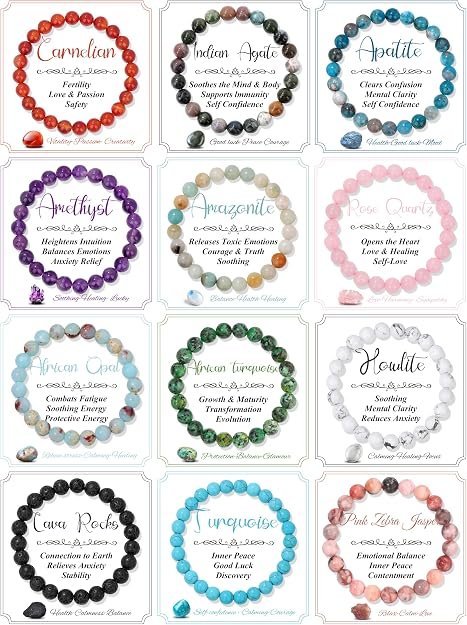
2026 jewelry trends for crystal bracelets are best understood as design directions, not instructions to buy every new color or symbol. Trade reporting this year has highlighted visible beads, expressive gemstone color, personal storytelling, layering, and jewelry that can move between special occasions and ordinary wear. A natural-stone bracelet can interpret those ideas in a modest, wearable way. This Audday guide separates what sources actually reported from our own design advice, then shows how to evaluate material, fit, care, and longevity. Crystal associations are optional personal symbolism; no gemstone or bracelet guarantees healing, protection, money, or a change in life circumstances.
What is observable, and what is only an interpretation?
National Jeweler’s June 16, 2026 post-show report described big colorful beads, turquoise, white metals, charms, and alternative materials among directions observed at jewelry market week. Its September 23 holiday report discussed layering, personalization, and everyday wardrobe building in diamond jewelry. Stuller’s October 14 holiday report included stackable line bracelets, birthstone jewelry, and charms among its suggested categories for retailers. These publications address different product segments and have commercial perspectives. None proves that demand for every crystal bracelet style will rise, and none provides a sales forecast for Audday.
Our inference is narrower: shoppers evaluating a crystal bracelet may find expressive color, clear material descriptions, and an adaptable form useful. That is a design hypothesis, not a statistic. A bright bead may attract attention, but the piece still has to fit the wrist, survive an ordinary routine, and match clothing the wearer owns. The rest of this guide converts each observed direction into a decision that a customer can actually test. Sources are linked with publication dates below so readers can separate reporting from recommendations.
Direction one: color that has a purpose in the design
Colorful stones can make a bracelet feel more individual than an all-neutral strand, but a design needs hierarchy. Choose one dominant color, one quieter supporting color, and a neutral if needed. A blue-green accent can sit in a mostly black or cream bracelet; a warm orange bead can interrupt a brown base. This creates contrast without forcing the wearer to coordinate five unrelated hues. A palette should look good in daylight and with at least three real outfits, not only under the lighting of a campaign photograph.
Natural stones may vary from bead to bead. Some color is inherent to the material; other color can be altered by dye, coating, heat, or other treatment. Do not assume a vivid photograph proves either a natural origin or a particular treatment. Ask for the actual material list, treatment notes when known, and current images of the bead lot if a close match matters. Audday’s gemstone material analysis helps explain inclusions, polish, and visible variation. The goal is not to make every bead factory-identical; it is to let the customer know what kind of variation to expect.
Direction two: larger beads with proportion, not just scale
Large beads can make a strong focal point. On a small wrist or under a fitted sleeve, a full strand of heavy beads may be less comfortable than one or two larger accents among smaller rounds. Compare 6 mm, 8 mm, and 10 mm beads in a physical layout when possible. As diameter increases, the bead takes up more space on the inside of the bracelet’s curve, so a larger-bead strand may need a different finished length from a small-bead design. A generic “one size fits all” listing can be misleading.
Pay attention to movement as well as appearance. Does a focal bead rotate under the wrist? Does it strike a watch case or desk? Can the wearer put on a jacket without snagging a charm? Scale is successful when it gives the stone room to be seen while preserving ordinary use. Read the bead size chart for approximate dimensions and count estimates, then test the actual loop before tying it. A trend should never override a fit problem.
Direction three: a personal story that does not become a claim
Personalization may involve a birth month, an initial, a favorite place, a shared memory, or simply a color the wearer has loved for years. It need not involve a mystical promise. A bracelet can carry one clear association: “The green reminds me of the garden we planted,” for example. That sentence is more specific and honest than assigning multiple universal powers to a stone. If the wearer enjoys zodiac or crystal traditions, invite them to interpret the design in their own way rather than imposing a fixed explanation.
Audday’s energy reading can be used as a reflective prompt for color and intention. It is not a diagnostic service and does not establish a mineral’s ability to heal or protect. Liam’s handmade design process begins with the wearer, then considers natural-stone color, bead size, wrist fit, and construction. The meaning is allowed to remain personal. A piece should still be attractive and comfortable to someone who appreciates only the material and craft.
Direction four: layering with restraint
Stacking is one way to make an existing bracelet feel current without replacing it. Start with one piece that already fits and add a second that differs in scale or texture. A line of small gemstone beads can complement a watch or a narrow metal bracelet; two heavy strands may compete and rub against each other. Leave enough space that the pieces move comfortably. Check whether a hard metal edge repeatedly strikes a softer polished bead. A visually balanced stack can still be a poor daily-wear combination if it damages the materials.
For a first layered set, use one color as the anchor and let the second piece either echo it or provide a quiet contrast. Avoid assuming that an odd number of bracelets or one prescribed wrist side is universally correct. The wearer’s work, cuff length, hand dominance, and sensory preference matter more. Photograph the stack from a normal viewing distance rather than only a close-up. If it feels crowded, remove one element. Restraint is a design choice, not a failure to follow the trend.
Direction five: one adaptable detail
Charms and replaceable accents can make a bracelet evolve, but they need sound connections and a coherent base. A heavy dangling charm can pull a stretch strand off center or strike the stones. A small removable element may be easier to live with. Ask whether a charm can be detached or replaced without cutting the bracelet apart, what metal the connection uses, and how it should be checked for wear. For a detailed look at this microtrend, see our 2026 charm bracelet guide.
Adaptability can also mean restringing a favorite bead into a new size or changing a single spacer color. It does not require a constantly expanding collection. A piece that can be repaired or restyled has a better chance of remaining useful when a season changes. Keep a record of the stone names, bead diameter, original layout, and hardware finish. Exact replacement may be impossible with naturally variable material, but a thoughtful contrast can look deliberate rather than mismatched.
Material truth matters more when a look becomes popular
Trend demand can make similar-looking products appear together in search results even when their materials differ sharply. Compare natural stone, dyed stone, glass, resin, and lab-created materials by disclosure rather than by photograph alone. None of these categories is automatically a bad choice for every buyer; the problem is mislabeling. A customer may choose glass for color consistency or natural stone for its individual pattern, but they should know which they are buying. The same applies to solid metal, plated metal, stainless steel, and unspecified alloy hardware.
Ask whether the seller can identify each bead and describe any known treatment. A short, specific material list is more useful than a long collection of unexplained “healing” labels. Compare care requirements too: exposure to water, fragrance, heat, sunlight, abrasion, and cleaning products can affect different stones and finishes differently. When uncertain, remove the bracelet for risky activities, wipe it gently, and seek material-specific guidance. Audday emphasizes transparency because a design cannot be maintained well if its ingredients are a mystery.
How to evaluate a 2026 trend bracelet as a gift
A gift recipient may enjoy a current color but still need a familiar silhouette. Look at the jewelry they wear repeatedly. Do they like small beads or bold pieces? Do they wear silver-tone or warm metal? Do they stack a watch? Can you measure an existing comfortable bracelet? A trend report is less predictive of satisfaction than these ordinary observations. If the answer is uncertain, choose a restrained base or ask about a custom fit before production.
Include a note explaining the choice without telling the recipient what they must believe. “I chose this color because it reminds me of our trip” leaves space for their interpretation. If the bracelet uses a stone associated with a birth month or tradition, describe that association as context, not a guaranteed benefit. Add accurate care and sizing information. A thoughtful presentation gives the recipient the freedom to resize, restyle, or wear the piece in their own way.
Designing beyond a single season
Before buying, ask whether the bracelet works with everyday clothing, not only a holiday outfit or styled photograph. Choose construction that can be inspected and repaired. Avoid overfilling the strand with hard-to-replace novelty components. Take one daylight photo when the piece is new and keep the material record. If elastic loosens or a clasp begins to fail, stop wearing the bracelet until it is repaired rather than waiting for a sentimental bead to be lost.
Audday’s custom bracelet service starts with a brief about wrist size, use, palette, material preference, and a story if the customer wants one. The design can incorporate a current accent while keeping the foundation wearable. We do not promise that a bracelet will remain fashionable forever; we can make choices that are easier to understand, maintain, and adapt. Natural gemstones and hand assembly are part of our process, but each material and construction choice should still earn its place.
A seven-question buyer’s checklist
- What did a dated source actually report, and what is only styling opinion?
- Which color will work with the wearer’s existing wardrobe?
- Is the bead scale comfortable for their wrist and routine?
- Are the stones, treatments, cord, and metal accurately described?
- Can the finished piece be repaired or resized?
- Does the personal story belong to the wearer rather than to a generic claim?
- Will the bracelet still make sense without the trend headline?
If these questions have clear answers, a trend-led design can be a considered purchase. If not, slow down and request the missing details. A bracelet does not need to combine color, big beads, charms, astrology, and stacking all at once. One well-chosen design direction is usually easier to wear and explain.
Test a trend with jewelry you already own
Before ordering a new strand, place a favorite bracelet beside the proposed color or bead sample. Compare their widths, finishes, and how each one sits next to a watch or sleeve. This reveals whether the new piece adds a useful contrast or repeats something already in the jewelry box. If the existing bracelet fits poorly, measure why before copying its dimensions. A beautiful photograph cannot show how a hard bead feels against a desk during a full workday.
Try a single accent or temporary layout first. Photograph it in daylight, then review it again after a day instead of deciding from one social post. If the appeal depends entirely on a headline, wait. If the materials, fit, and personal story still make sense without that headline, the design is more likely to become part of a real wardrobe. This is a practical shopping test, not a claim that any style will remain popular for a set number of years.
Sources, dates, and limits
Reviewed October 16, 2026: National Jeweler, “Post-Vegas Jewelry Trend Report,” June 16, 2026; National Jeweler, “Holiday Diamond Jewelry Trends,” September 23, 2026; Stuller, “The 6 Biggest Holiday Jewelry Trends for 2026,” October 14, 2026. These report trade observations or supplier recommendations. Audday’s application to crystal bracelets is editorial interpretation, not proof of universal demand, conversion, medical benefit, or future resale value.
Frequently asked questions
Are crystal bracelets still in style in 2026?
Current trade coverage includes colorful beads, layering, and personal jewelry stories, all of which can inform a crystal bracelet. Whether a specific piece suits you depends on fit, material, and style rather than a forecast.
What is the easiest 2026 direction to try?
Choose one change: a color accent, a different bead scale, or one meaningful detail. Keep the rest of the bracelet comfortable and familiar.
Do large gemstone beads fit everyone?
No. Larger beads alter weight and inner fit. Try the complete design on the intended wrist and check it under sleeves and during normal movement.
Are all colorful beads natural gemstones?
No. Similar colors can come from natural, treated, dyed, lab-created, or imitation materials. Ask for accurate identification and treatment notes.
Do 2026 jewelry trends guarantee that a bracelet will sell or gain value?
No. Trend reports describe observations or merchandising ideas; they do not guarantee demand, sales, resale value, or personal outcomes.