

Crystal Bracelet Guides
Bead Size Chart for Bracelets: A Simple mm Guide

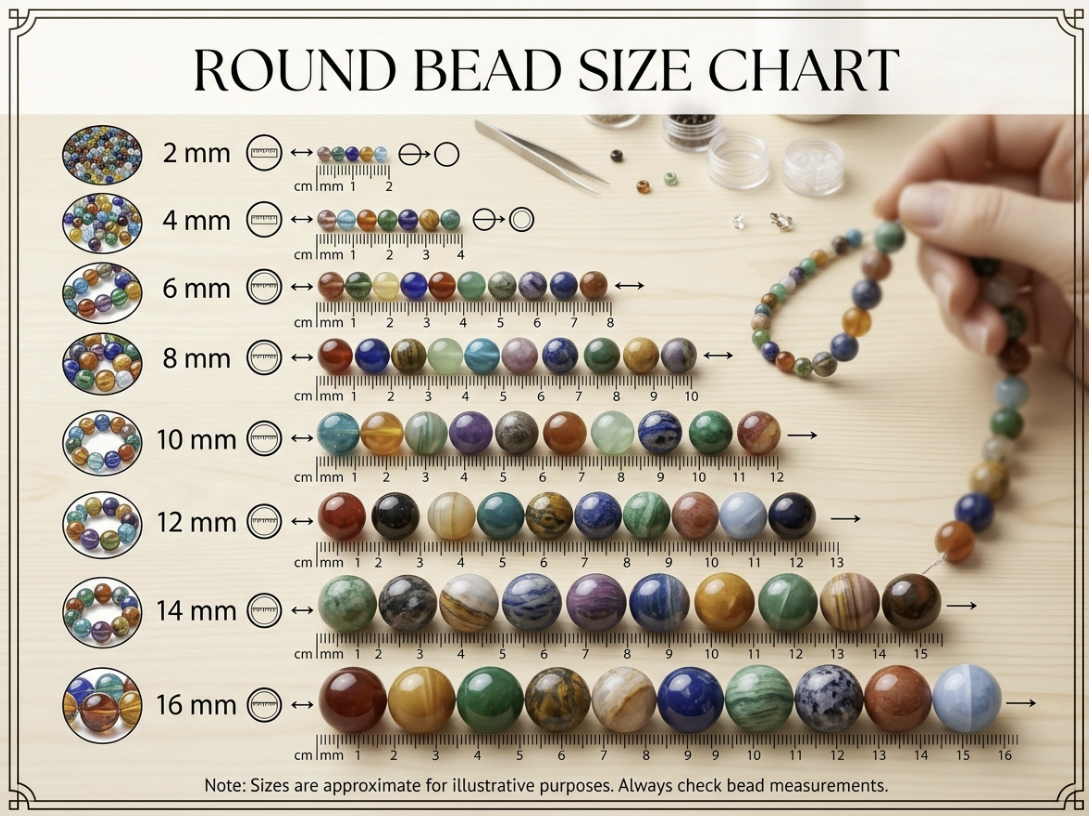
Quick answer: Bead size is the diameter of the bead, usually shown in millimeters. For stretch bracelets, 6 mm beads create a light look, 8 mm beads create a classic look, and 10 mm beads create a bold look. Always check the hole size as well as the bead diameter.
A bead size chart makes jewelry planning easier. You can compare bead diameters, estimate a bead count, and choose a cord that fits the hole. It also helps you avoid mixing beads that look balanced in a product photo but feel uneven in a finished bracelet.
This guide focuses on round beads for bracelets. Use it as a starting point, then test your design with a short strand before you make the full piece.
Bead Size Chart: Common Round Beads
| Bead diameter | Approximate look | Approximate beads for a 7-inch bracelet* | Good use |
|---|---|---|---|
| 2 mm | Tiny and delicate | 89 | Spacer details and fine patterns |
| 4 mm | Small and neat | 45 | Layered bracelets and accents |
| 6 mm | Light everyday size | 30 | Slim stacks and mixed designs |
| 8 mm | Balanced and easy to wear | 22 | Beginner bracelets and layering |
| 10 mm | Classic crystal bracelet size | 18 | Everyday gemstone bracelets |
| 12 mm | Bold and noticeable | 15 | Statement bracelets |
| 14mm | Large and heavy | 13 | Focal beads and short designs |
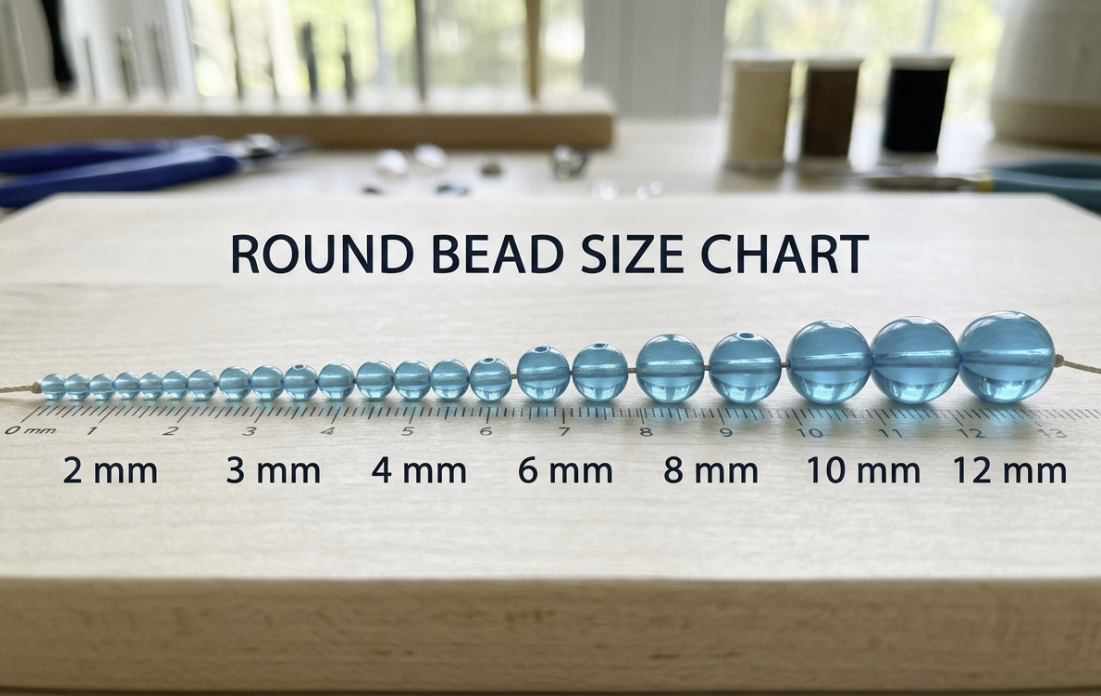
Which Bead Size Should You Choose?
Choose your bead size based on the finished look, not only the product photo. Small beads create detail and movement. Large beads create a stronger visual point but can make a bracelet feel heavier.
4 mm beads: light and easy to layer
Four-millimeter beads work well in slim bracelets. They fit small wrists and pair easily with watches or other jewelry. Use them when you want a clean, quiet design.
6 mm beads: a flexible everyday choice
Six-millimeter beads suit many bracelet styles. They give you more color and stone detail than 4 mm beads without adding much weight. This size works well for mixed gemstone bracelets.
8 mm beads: the classic choice
Eight-millimeter gemstone beads create the familiar crystal bracelet look. They show color and texture clearly, so they work well for a first DIY project. Many custom bracelet designs start with this size for that reason.
10 mm and 12 mm beads: strong focal pieces
Larger beads make a bracelet stand out. Use them as a full strand when you want a bold design, or place one or two in the center as focal beads. Check the weight before you make a long stack.
Bead Diameter and Hole Size Are Different
Bead diameter tells you how large the bead looks. Hole size tells you what cord, wire, or pin can pass through it. You need both measurements to build a bracelet that lasts.
For a stretch bracelet, test whether your cord can pass through the bead hole twice. This gives you a better chance of hiding the knot inside a bead. If the hole is too small, use a thinner cord or leave the knot visible on the underside of the bracelet.
| Project type | Check first | A practical choice |
|---|---|---|
| Stretch bracelet | Hole size and cord fit | Elastic cord that passes through the bead twice |
| Beaded necklace | Hole size and weight | Beading wire or thread that supports the bead weight |
| Charm bracelet | Bead hole and charm loop | Larger-hole beads with secure jump rings |
| Mixed-media bracelet | Diameter, hole size, and pattern | Keep the main beads close in size |
How to Estimate Bead Count for a Bracelet
First, measure your wrist. Add room for comfort. Then divide the finished bracelet length by the bead diameter.
Use this simple planning method:
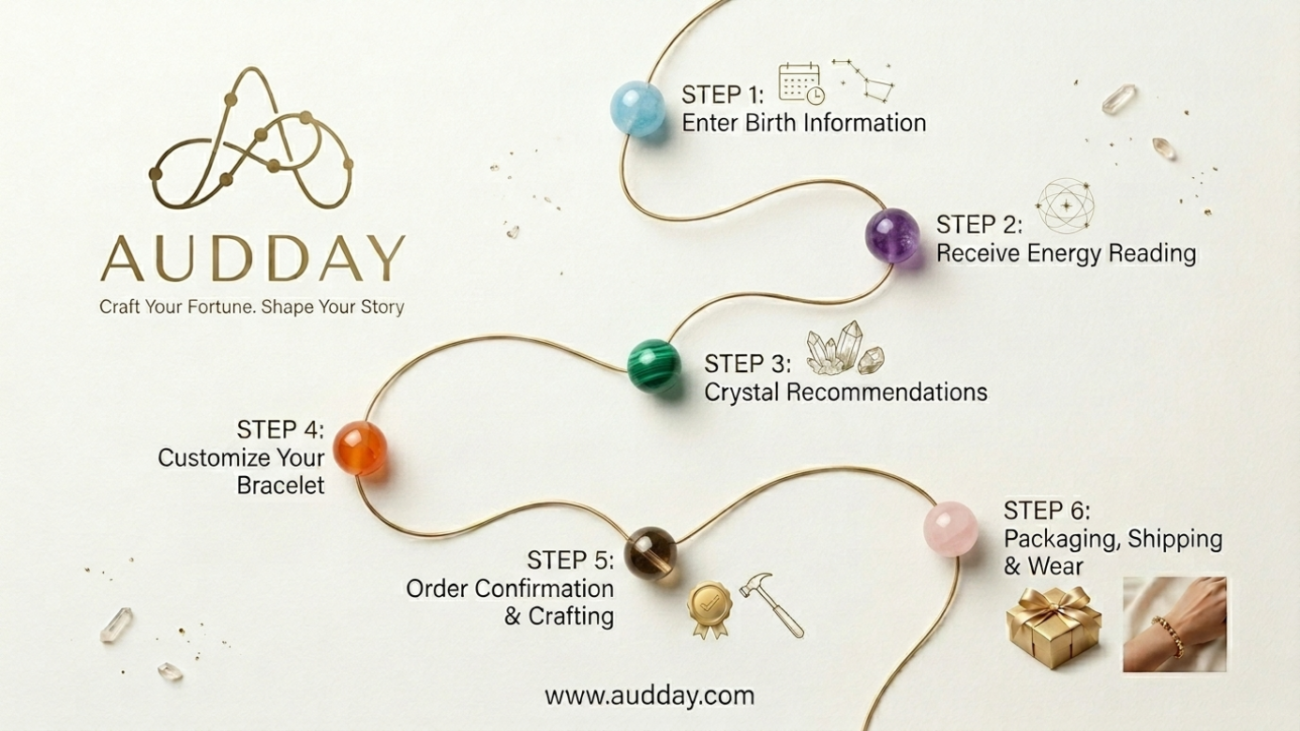
Flowchart caption: A quick way to estimate how many beads you need for a bracelet.
Flowchart alt text: Measure the wrist, add comfort room, choose bead size, estimate bead count, account for spacers, and test the layout.
For example, an 8 mm bead is about 0.31 inches wide. A 7-inch stretch bracelet may use about 22 beads. Add a center charm or metal spacers, and you may need one or two fewer gemstone beads.
Lay the full pattern out before you cut the cord. That step catches most sizing problems early.
Seed Bead Sizes: Read the Label Carefully
Seed beads use a different sizing system from round gemstone beads. You may see labels such as 11/0, 8/0, or 6/0. A larger number often means a smaller seed bead, but size can vary by brand, shape, and finish.
Use seed bead labels to compare products from the same maker. When you mix brands, order a small sample first. A 3 mm round gemstone bead and a seed bead label do not describe the same type of measurement.
| Seed bead label | Typical role in a bracelet design | What to check |
|---|---|---|
| 11/0 | Fine detail and small accents | Color, finish, and hole consistency |
| 8/0 | Visible spacers and texture | Whether it sits neatly beside your main bead |
| 6/0 | Bold spacer or pattern element | Weight and hole size |
Build a Balanced Bracelet With Mixed Bead Sizes
Mixing bead sizes can make a simple bracelet look more custom. Keep one size as the main bead. Use smaller beads as spacers or use one larger bead as the center point.
Try one of these easy layouts:
| Design idea | Main bead | Accent bead | Result |
|---|---|---|---|
| Classic crystal strand | 8 mm gemstone beads | 4 mm metal spacers | Clean and polished |
| Soft layered bracelet | 6 mm gemstone beads | 3 mm accent beads | Light and easy to stack |
| Center-stone design | 6 mm gemstone beads | One 10 mm focal bead | A clear center point |
| Color-block bracelet | 8 mm gemstone beads | Same size in a second color | Simple and bold |
Browse crystal beads or gemstone beads after you choose the size that fits your project.
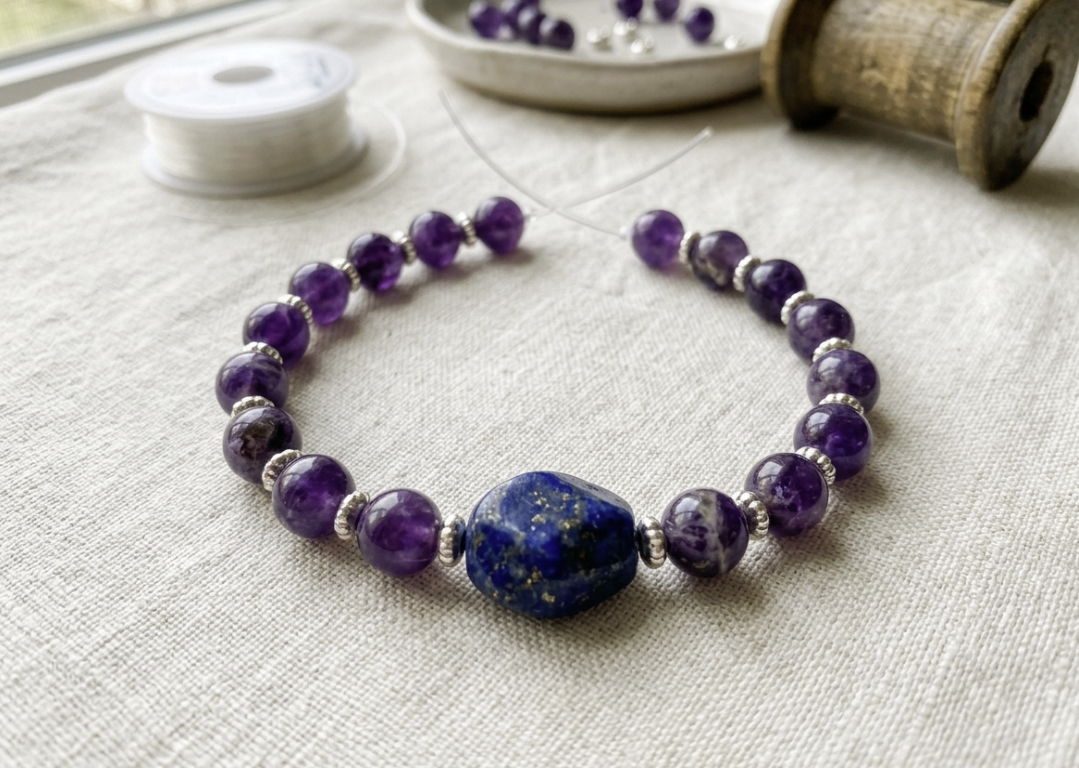
How to Measure a Bead at Home
Use a digital caliper when you need an exact measurement. Place the bead between the caliper jaws and read the widest point. Use a ruler for larger beads, but use a caliper for small sizes.
Measure several beads from the same strand. Natural gemstone beads can vary slightly in shape and size. That small variation can add character, but it matters when you build a strict repeating pattern.
Common Bead Size Questions
Is 8 mm a good bead size for bracelets?
Yes. Eight-millimeter beads work well for many crystal bracelets because they show color clearly and still feel comfortable for everyday wear. They are also easy for beginners to string.
How many 6 mm beads make a bracelet?
A 7-inch bracelet may use about 30 round 6 mm beads before spacers and a knot. Measure your wrist and test the full layout for the best fit.
Can I mix 6 mm and 8 mm beads?
Yes. Use one size as the main bead and the other as a focal detail. A random mix can look uneven, so plan the pattern before you string.
Why do beads with the same label look different in size?
Different makers, shapes, cuts, and natural materials can change the final look. Check the listed diameter and buy a small sample if your project needs a close match.
What bead size is best for a beginner?
Start with 6 mm or 8 mm round beads. They are easy to hold, easy to thread, and easy to use in a balanced bracelet pattern.
Choose Beads With Confidence
A bead size chart gives you a plan before you buy or string anything. Measure your wrist, choose one main size, check the hole size, and test the layout on a bead tray.
When you are ready, follow our crystal bracelet tutorial or choose a coordinated custom bracelet design.
Read the Gemstone Material Analysis before choosing bead size, finish, inclusions, and natural stone character. For a made-to-order result, visit the Custom Bracelet page.
How to read this bead size chart without a sizing mistake
The chart estimates how many round beads can occupy a straight line about seven inches long. It does not promise that a closed circle of those beads will fit a seven-inch wrist. A strand curves around the wrist, and larger round beads take up space inside that curve. The actual fit changes with bead diameter, bead shape, spacer width, knot or clasp length, cord tension, and how loosely the wearer likes a bracelet. Use the table to purchase a sensible quantity of beads, then measure and test the real layout before you finish the piece.
Convert inches to millimeters before doing bead-count math: one inch equals 25.4 mm, so seven inches is about 177.8 mm. Dividing that straight-line distance by 8 mm suggests roughly 22 round beads. But if the final design includes four 3 mm spacers, those spacers occupy about 12 mm of line before allowing for the connection. The estimate changes again if natural beads differ slightly from their nominal diameter. Buy a few extra matching beads where possible, but do not assume extra beads will fix an uncomfortable inner circumference.
Measure bead diameter and hole diameter separately
The outside diameter gives the bracelet its visible scale. The drilled hole determines whether your cord, thread, or wire will pass through safely. A listed 8 mm bead may have a hole too narrow for a doubled elastic cord, while a small bead with a large opening may be easy to string but look different from its neighbors. Test the smallest hole in the whole pattern, including metal spacers and a focal charm. Do not force a thick cord through a rough drilling edge; the edge can abrade it during wear. If the hole is uncertain, request a supplier measurement or order a sample before planning a large set.
For irregular, faceted, or flattened beads, one number may not describe the space a piece occupies on the string. Measure along the drilling direction as well as across the widest face. A faceted bead can appear larger in photographs because it catches more light while occupying less length than a round bead. A flat disc may contribute little width but a strong visual pattern. Lay actual materials on a tray beside a ruler rather than treating every shape as a perfect sphere.
Choose size by the wearer and the role of the bracelet
Small beads can create a flexible, quiet line for someone who already stacks jewelry. Medium beads make natural color and inclusions easier to see while remaining adaptable. Large beads can become a statement, but they add weight and change how the strand moves. The best size is not determined by gender or age. Ask what the wearer already finds comfortable, whether they type or work with their hands, and whether the bracelet must fit under a sleeve. If it is a gift, comparing an existing bracelet is more reliable than choosing from a generic “men’s” or “women’s” size label.
Mixing sizes works when each has a job. For example, use 6 mm beads for most of the circumference, two 4 mm spacers to frame a central 8 mm bead, and then test whether the center stays visible when the wrist turns. If it rotates under the wrist, adjust weight and placement before adding more accents. Avoid joining a very heavy focal bead to a thin elastic strand without checking stress. A design can be visually symmetrical yet mechanically uncomfortable.
Account for natural variation and treatments
Natural gemstone beads may vary in hue, inclusions, polish, and exact diameter. Sort the strand before calculating a repeating pattern. Keep beads with chipped holes or sharp edges out of a stretch design until they can be assessed; a hidden edge can shorten cord life. If color matching is crucial, ask whether the beads are natural, dyed, coated, stabilized, or lab-created. A close digital photograph is helpful, but screen color and batch variation can still alter the final appearance. Audday’s gemstone material analysis explains these characteristics in more detail.
Material care also affects size choices. Larger beads present more surface area for impact with a desk, watch, or another bracelet. A highly polished finish can show scratches differently from a matte surface. A delicate material may be more suitable as one focal bead than as a full daily-wear strand. Describe symbolic associations as a personal interpretation, not as a reason to ignore practical wear or promise health, protection, or wealth.
A reliable final-fit test
Arrange the full pattern, including spacers and charm, before cutting the working cord. Bring the ends together temporarily and check the loop against the intended wrist or a bracelet with a known comfortable fit. Rotate the piece, flex the hand, and make sure no bead pinches the skin. Test how it slides over the hand if using elastic; forcing the strand over a closed fist can overstretch it. Make one change at a time, photograph the result, and note the finished bead count and circumference for future repairs.
Once the sizing is right, follow our crystal bracelet making guide for stringing, knot checks, and troubleshooting. If you would rather have a maker balance bead scale with fit, start with Audday’s custom bracelet design and share the dimensions you measured. An energy reading can be an optional reflection prompt for color or theme, but the physical design still needs to be comfortable and maintainable.