

Crystal Bracelet Guides
Crystal Bracelet for a Meditation Space: Choose a Calm Design

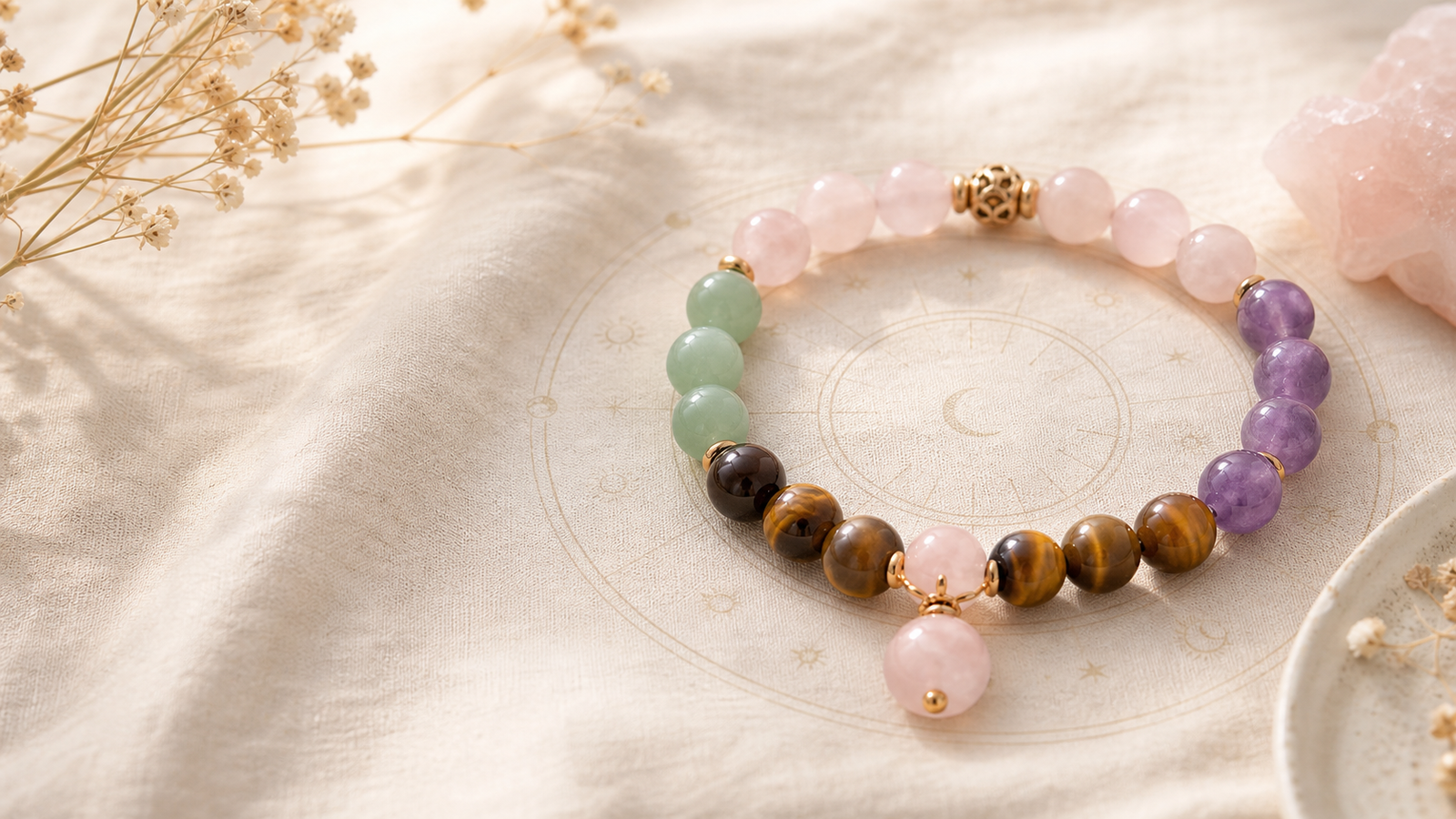
Choosing Crystal Bracelet for a Meditation Space: Choose a Calm Design is easier when you separate material questions from personal symbolism. This Audday guide focuses on neutral colors, tactile texture, storage, and occasional wear so you can make a more confident jewelry decision without relying on exaggerated promises. Audday is a crystal artisan brand born in Haifeng, Shanwei, Guangdong, a region connected with a complete colored-gemstone production tradition. We combine natural material knowledge, handmade design, comfortable sizing, and international e-commerce for customers in Europe, North America, Australia, and other markets.
What to compare first
Start with the wearer and the occasion. A bracelet for quiet daily styling may need a lighter bead scale and a restrained palette, while a birthday or holiday gift may benefit from a clearer focal stone and a personal message. Compare color, transparency, inclusions, polish, bead shape, surface texture, weight, wrist fit, and whether the bracelet will be worn alone or stacked. Natural gemstones can vary, so a small difference from a product photo is not automatically a defect.
Material, meaning, and practical design
Birthstone, zodiac, numerology, and intention themes can help you describe a story, but they should not restrict personal taste. A person may choose a stone because of its color, cultural meaning, memory, texture, or simply because it feels right visually. For a responsible design, pair the symbolic idea with practical information: where the bracelet will be worn, how often it will be handled, what size feels comfortable, and how it should be cared for.
Use Audday tools and customization
Read the Gemstone Material Analysis to compare natural stone character, bead finish, inclusions, and sizing considerations. If you want a design built around your preferences, visit the Custom Bracelet page. You can also use the custom energy interpretation page as a reflective starting point, then explore crystal bracelet collections before ordering.
Care and honest expectations
Keep natural gemstone jewelry away from harsh chemicals, long soaking, extreme heat, and hard impact. Wipe it with a soft cloth and store it separately. A crystal bracelet can be a meaningful spiritual, cultural, or aesthetic accessory, but it does not replace medical, psychological, legal, or financial advice and does not guarantee a particular result.
FAQ
Can I request a different bead size?
Yes. Share your wrist measurement and preferred visual scale so the custom design can be adjusted.
Can I combine several materials?
Yes. A mixed design can balance color and texture, provided the overall weight and comfort remain suitable.
How do I explain what I want?
Give Audday your intention, preferred colors, stones, size, occasion, and examples of styles you like.
Make the space support the practice
A meditation space does not need to be large, expensive, or perfectly quiet. It needs to help the body recognize a transition from ordinary activity to a slower, more attentive rhythm. A crystal bracelet can sit in that space as a visual cue, a tactile object, or a small reminder of the intention chosen for the session. Place it where it will not be knocked over by cushions, candles, water, or books. The point is not to create a supernatural guarantee. The point is to reduce friction between deciding to pause and actually beginning. Audday treats a bracelet as wearable design with personal symbolism, so the setting should feel practical, calm, and genuinely yours.
Choose a clear purpose for the bracelet
Before choosing stones, write one short sentence about the practice. You might want a reminder to breathe, a cue to return to the present, a gentle boundary around screen time, or a symbol of patience during a difficult week. A purpose keeps the selection focused and prevents the space from becoming a crowded collection of objects with no relationship to the ritual. A meditation bracelet can be meaningful even when the beads are chosen for color, texture, or comfort alone. If the intention changes, the bracelet can change meaning without needing to be replaced. This flexible approach respects personal experience while avoiding claims that any mineral can diagnose, treat, or guarantee an outcome.
Match the design to the room
The visual language of a meditation space can be quiet, warm, earthy, or bright. Neutral quartz, smoky gray, deep green, lavender, and soft blue can work with wood, linen, ceramics, or plants. A bracelet with a stronger contrast may be useful when you want the object to remain visible at the edge of a mat. Consider the background, lighting, and distance from your usual seat. Highly reflective beads can create distracting highlights under a lamp, while matte stones may feel more grounded visually. Pick a design you enjoy looking at for several minutes; aesthetic comfort is a legitimate part of making a repeatable practice.
Consider touch and sound
Some people meditate with eyes closed and use a bracelet as a tactile anchor before or after the session. Smooth rounded beads are comfortable to hold, while sharp facets, heavy charms, or loose metal pieces can create noise and distraction. If the bracelet will rest on a wooden tray, add a soft cloth so it does not click when moved. Stretch bracelets should be handled without pulling the cord over a finger repeatedly. Adjustable or clasp designs can be useful when several people share the space, but the best choice is the one that feels easy to pick up and put down.
Keep the area safe and uncluttered
A calm setting still needs ordinary safety rules. Keep beads away from children or pets who may swallow small parts. Place jewelry away from candle flames, incense ash, hot stones, essential oils, and open water. Do not balance a bracelet on a heater, window ledge, or unstable statue. If you use a singing bowl or bell, leave enough space that vibration cannot send the bracelet across the floor. A dedicated tray or shallow dish makes the boundary clear and keeps the object from disappearing under books. Safety and simplicity make it easier to return to the practice consistently.
Use the bracelet as a beginning cue
A simple sequence can turn the bracelet into a reliable start signal. Sit down, place both feet or your cushion comfortably, notice the bracelet, and take three unforced breaths. Let the object mark the beginning without demanding that the mind become perfectly quiet. When the timer ends, touch the beads once, stand slowly, and return the bracelet to its tray or wear it if that is part of your day. Repeating the same small sequence creates a behavioral association. It does not require a belief about invisible forces, and it works whether the session lasts two minutes or twenty.
Choose stones by meaning and material
People often associate colors and stones with qualities such as clarity, calm, grounding, courage, or compassion. These associations can help a design communicate a personal story. They are not medical instructions or evidence that a bracelet changes the nervous system. Natural gemstones also differ in hardness, porosity, treatments, and sensitivity to water or sunlight. Audday’s Gemstone Material Analysis explains why material knowledge matters before a bead becomes part of a daily routine. Select a combination that feels honest, then follow practical care guidance for the actual material.
Build a small rotation
One bracelet does not need to represent every intention. A small rotation of two or three designs can keep the practice fresh without filling the room with clutter. You might use a lighter color for a morning breathing session, a darker neutral for journaling, and a favorite gift bracelet for weekly reflection. Store each piece separately and label the design if the materials look similar. Rotating pieces also gives elastic time to rest and lets you inspect beads, knots, and clasps. The goal is a manageable system, not a collection that creates another decision every time you sit down.
Plan around travel and shared rooms
Meditation may happen in a bedroom, office, hotel, or outdoor space rather than a permanent studio. Use a soft travel pouch with a divider and keep the bracelet away from chargers, keys, cosmetics, and damp towels. If a room is humid, let the bracelet dry in open air before closing the pouch. In a shared home, choose a shelf or drawer that others can recognize as a personal practice area. A portable design should be comfortable, durable, and easy to identify; a complicated display is not necessary for a meaningful pause.
Make the practice inclusive
A meditation space can welcome different beliefs and levels of experience. Some visitors may see a bracelet as jewelry, others as a reminder, and others as a spiritual symbol. Do not pressure anyone to hold a stone, repeat a phrase, or accept a claim about energy. Explain the object in plain language: it is a handmade accessory chosen for color, texture, and intention. If a guest prefers not to use it, the space remains complete. Inclusive language strengthens trust and lets the design carry meaning without turning personal symbolism into a rule for everyone.
Care for the bracelet after practice
After meditation, check whether the bracelet touched lotion, sweat, water, incense residue, or essential oil. Wipe it with a soft dry cloth and follow the material-specific guidance before putting it away. Avoid salt, harsh cleaners, prolonged soaking, and unverified oils. Lay a stretch bracelet flat or in a loose circle instead of hanging it from a hook. If the cord feels loose, a bead is chipped, or a clasp catches, stop stretching it and request repair. Ordinary maintenance protects the handmade work more reliably than a special charging ritual.
Design for a personal story
A custom meditation bracelet can mark a transition, a promise to rest, or a period of learning. Choose a focal bead, a restrained palette, or a small spacer that reminds you of the story without making the piece visually busy. Liam and the Audday team combine natural gemstone variation with hand assembly, so two bracelets made from the same material will never be completely identical. You can share the intention in the order notes and ask for a design that fits the room, your wrist, and your everyday clothing. Explore the Custom Bracelet process when you want the symbolism and construction planned together.
Connect the object to reflection
A bracelet becomes more useful when it leads to a short reflection rather than replacing one. After a session, write one sentence about what you noticed: breath, tension, sound, impatience, comfort, or a moment of attention. The bracelet can remain nearby as a visual index for those notes. If you want a guided prompt about intention, Audday’s Energy Reading offers a personal reflection pathway. Treat the reading as an interpretive tool, not a prediction or medical service, and keep the final meaning grounded in your own choices.
Avoid common setup mistakes
A meditation corner can become less calming when it includes too many signs, fragrances, lights, and objects. Avoid placing jewelry where you must reach across a flame or wet surface. Do not bury beads in sand, crystals, or salt, and do not assume smoke or sunlight is safe for every treatment. Keep the bracelet visible enough to find but protected from constant handling. If a display feels performative rather than supportive, simplify it. A cushion, a timer, a glass of water placed safely away, and one meaningful object may be enough.
Review the setup each month
Once a month, look at the room and the bracelet together. Is the object still easy to reach? Does the color still feel connected to the intention? Has dust, humidity, or friction affected the surface? Is the cord changing length? A short review keeps the practice responsive instead of turning it into a fixed obligation. You can change the tray, move the lamp, revise the written intention, or retire a bracelet for a season. Handmade jewelry is allowed to have chapters. Maintenance and reflection are part of the same respectful relationship with the object.
A practical Audday approach
Audday’s handmade process starts with the wearer rather than a promise about what a stone can do. We consider wrist fit, bead size, material character, color balance, construction, and the situations in which the bracelet will be worn. That may mean choosing a tougher surface for frequent travel, a lighter palette for a quiet room, or a custom length that does not distract during breathing. The finished piece is a personal accessory and a reminder. It can support a ritual, but it cannot guarantee healing, protection, wealth, or a particular emotional result.
Start small and return often
The most sustainable meditation space is one you will actually use. Begin with one safe place to sit, one short intention, and one bracelet that feels comfortable. Let the design remain a cue rather than a test. Over time, notice which colors, textures, and routines help you return to attention. When the bracelet is stored cleanly, inspected regularly, and chosen with honest expectations, it can carry a meaningful story without carrying unrealistic pressure. A quiet object, used consistently, can become part of a gentle daily rhythm.
Frequently Asked Questions
What is a good crystal bracelet for a meditation space?
Choose a comfortable, well-made bracelet whose color, texture, and personal symbolism support your routine. Material care and fit matter more than a universal best stone.
Where should I keep a meditation bracelet?
Use a cool, dry tray, lined box, or soft pouch away from flames, water, oils, direct sun, and sharp objects.
Can a crystal bracelet improve meditation?
It can act as a visual or tactile reminder that helps you begin a practice. It should not be presented as a guaranteed medical or spiritual treatment.
How should I clean a bracelet used near incense or oils?
Wipe it gently with a soft dry cloth and follow the care limits for the actual gemstone, treatment, cord, and metal findings. Avoid unverified cleaners and prolonged soaking.