

Crystal Bracelet Guides
Gemstone Bracelet vs Glass Bead Bracelet: How to Choose

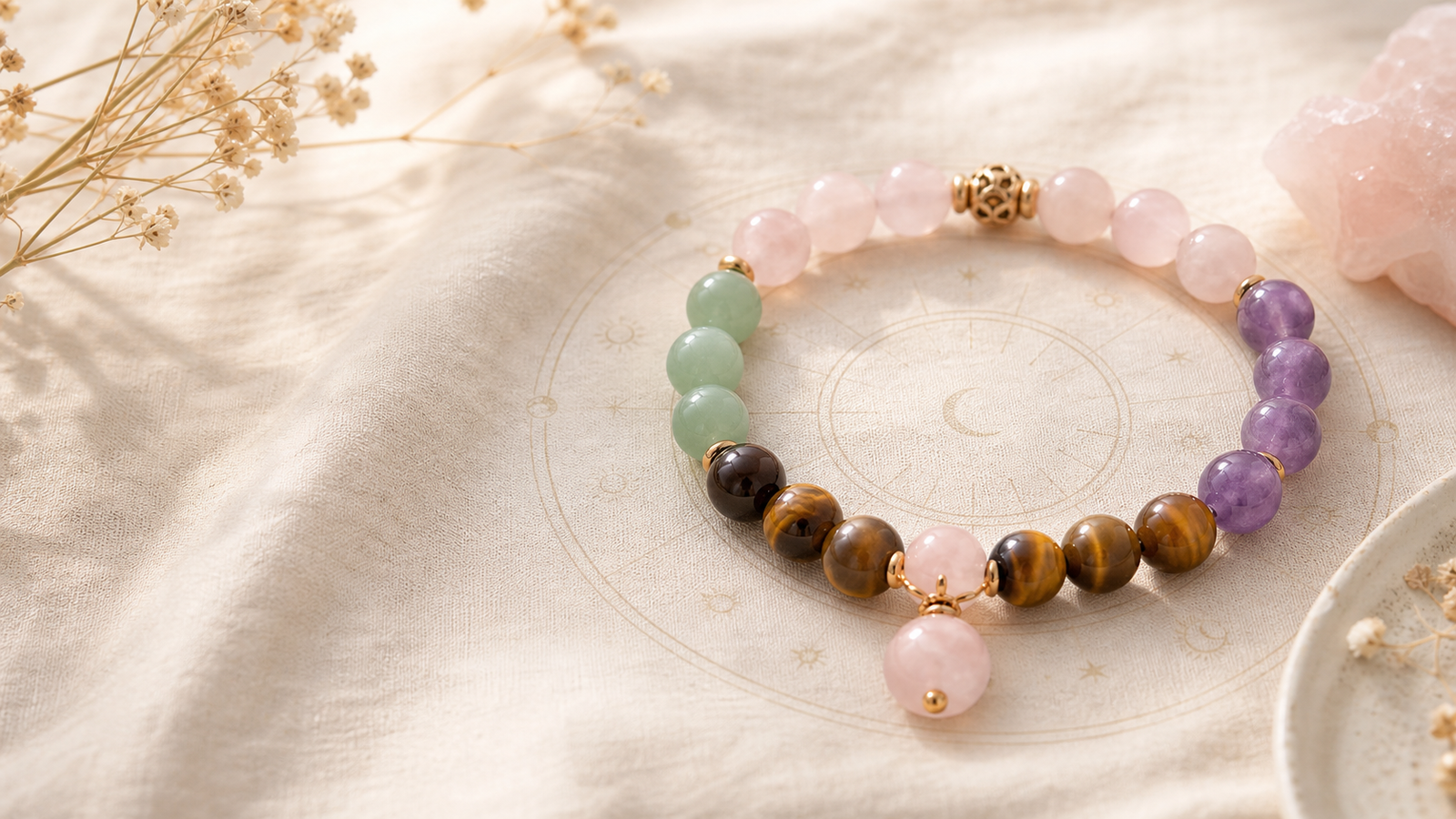
Choosing a gemstone bracelet vs glass bead bracelet starts with material, not a promise. Natural gemstone beads can show small differences in color, pattern, transparency, and polish, while glass beads are usually made for a more controlled color and finish. Both can be beautiful in jewelry; the useful question is which visual character, care routine, and personal story you want to wear. At Audday, Liam uses handmade composition and clear material choices to help a bracelet feel considered from the first bead to the final fit.
Gemstone bracelet vs glass bead bracelet: the visible difference
Natural stones often have tonal shifts, inclusions, or irregular details that make a strand individual. Glass can deliver saturated or very even color and may suit a crisp, graphic palette. Neither variation nor uniformity is automatically better. If you enjoy natural material character, compare stone types on Audday’s gemstone material analysis page. If you are creating a personal mix, use the custom energy interpretation page to organize colors and the feeling you want the bracelet to suggest.
Choose by daily wear and custom design
Think about bead size, weight, surface finish, and the jewelry you already wear. Small round beads tend to layer easily, while a focal bead gives a more deliberate look. Natural gemstone jewelry should be protected from hard impact, strong cleaners, and prolonged soaking; glass and hardware also benefit from gentle care. Audday makers work with natural gemstone variation by hand, drawing on the colored-gemstone craft tradition of Haifeng, Shanwei, Guangdong. Plan a custom bracelet with your wrist size and preferred material direction, or browse the bracelet collection for a ready-to-wear reference.
Frequently asked questions
Do natural gemstone beads match perfectly?
No. Natural beads can vary, and that individual character is part of a handmade design.
Are glass beads easier to style?
They can be useful for a uniform color story, while gemstones bring a more naturally varied appearance.
Should a bracelet promise a result?
No. Choose symbolism as personal expression, not a guarantee about health, money, relationships, or outcomes.
Start with the purpose
Comparing a gemstone bracelet with a glass bead bracelet starts with the purpose of the piece, not with the assumption that one material is always better. Natural gemstones offer mineral character, inclusions, color variation, and a story connected to the earth. Glass can provide consistent color, clarity, shape, and an accessible price. Either material can be attractive and wearable when the buyer understands what it is, how it was made, and how it should be cared for. The right choice depends on style, budget, comfort, symbolism, and daily routine.
Identify the material
Natural gemstone beads are formed from mineral material and often show variation in banding, translucency, saturation, and inclusions. Treated stones may be heated, dyed, stabilized, coated, or otherwise enhanced. Glass beads are manufactured from silica-based material and can be transparent, opaque, iridescent, matte, or patterned. Reconstructed and synthetic gemstone products occupy other categories. Ask the seller to identify the material accurately rather than relying on a color name. Audday’s Gemstone Material Analysis explains why disclosure is central to a fair comparison.
Compare visual consistency
Visual consistency is one of glass’s strengths. A glass bracelet can repeat the same color and shape across the strand, which is useful for a precise palette or a graphic pattern. Natural gemstone beads are more individual. A few beads may have different lines, clouds, or tone, and that variation can make a handmade piece feel unique. If you prefer a uniform minimalist look, glass may be appealing. If you enjoy natural character and do not need every bead to match, gemstone material may be a better fit.
Consider weight and feel
Weight and surface feel depend on diameter and construction as much as material. A large glass bead and a large gemstone bead can both feel substantial, while a small bead in either material can feel light. Polished surfaces slide smoothly; matte finishes feel more tactile; faceted beads catch light. Compare samples in your hand rather than judging from a photograph. If the bracelet will be worn for long hours, choose a bead size and cord that stay comfortable during typing, driving, and ordinary movement.
Check color durability
Color durability depends on the specific material and treatment. Some glass colors are highly consistent, while dyed or coated materials may need protection from chemicals, prolonged sunlight, or abrasion. Natural stones can also be treated or finished, so “gemstone” alone does not tell you every care requirement. Ask about water, heat, fragrance, and cleaning limits. Avoid bleach, alcohol, toothpaste, abrasive cleaners, and prolonged soaking unless the maker confirms compatibility. Honest care instructions matter more than a broad material label.
Use symbolism responsibly
Symbolism is another point of difference, but it should be handled responsibly. People may choose a gemstone because of birthstone, zodiac, cultural, or intention associations. Glass may be chosen for a color that represents a memory or mood. Neither material guarantees healing, protection, luck, or financial success. A bracelet can be a personal reminder and an attractive accessory. Audday’s Energy Reading can serve as a reflective prompt, while material choice should remain grounded in comfort, appearance, and disclosure.
Compare total value
Budget is often part of the decision. Natural gemstone price can vary with scarcity, quality, treatment, size, and sourcing. Glass can offer a consistent look at a lower or more predictable cost, although handcrafted glass and specialty finishes can also be valuable. Compare the full bracelet rather than only the cost per bead: include cord, clasp, spacers, labor, packaging, and possible repairs. A lower price is not automatically a better value if the fit or construction does not suit the wearer.
Plan fit and bead count
Fit and bead count work the same way for both materials. Measure the wrist where the bracelet will sit and choose close, relaxed, or stackable ease. Six to eight millimeter beads are versatile, while larger beads create a stronger profile. Hole size and spacer thickness affect the final circumference. Stretch bracelets need enough ease to pass over the hand without excessive tension. Adjustable or clasp designs can help when the exact measurement is uncertain. Do not copy a generic bead count from a different material or diameter.
Match the wearing context
Consider how the bracelet will be worn. Glass may suit a bright, uniform fashion palette or a design that coordinates with a particular outfit. Gemstone may suit a natural, handmade, or textural aesthetic. A mixed bracelet can combine materials, but check that surfaces, weight, hole sizes, and care requirements work together. Sharp edges or rough finishes can scratch softer beads. A maker should review the combination before assembly, especially when the bracelet will be stacked with a watch or metal jewelry.
Write a custom brief
For a custom project, explain what matters most: color consistency, natural variation, tactile feel, symbolism, price, bead diameter, or a specific story. Audday’s Custom Bracelet process lets you share these priorities with Liam. Custom does not mean a gemstone result is automatically superior to glass. It means the design brief receives attention and the materials are selected to meet a particular use. Clear expectations lead to a better result than a generic material promise.
Follow practical care
Care after wearing is simple when the material is known. Wipe the bracelet with a soft dry cloth, let it rest flat, and store it separately from sharp metal pieces. Remove it before swimming, showering, sauna use, harsh cleaning, strenuous work, or activities with impact unless the maker confirms compatibility. Inspect elastic, knots, clasps, coatings, and bead edges. If the bracelet becomes loose, chipped, sharp, or visibly changed, stop wearing it and ask about repair.
Understand natural variation
Natural variation is not the same as poor quality. A gemstone may include a line or inclusion that reflects its formation, while a glass bead may show a handmade bubble or color transition. Quality review should focus on safety, stable construction, suitable holes, comfortable surfaces, and accurate description. Reject beads with dangerous cracks or sharp edges, but do not demand factory-level sameness from natural material. Ask for photographs or a sample row when color matching is important.
Choose for the recipient
Gift buyers can choose based on the recipient’s style. A person who likes uniform modern jewelry may appreciate glass, while someone who enjoys earth-toned handmade pieces may prefer gemstone. Ask about existing watches, rings, and colors. For a surprise, compare a bracelet already owned by the recipient. Include a note explaining why the material and palette were chosen, without claiming guaranteed outcomes. A useful gift is one the recipient can wear with ordinary clothing.
Use a decision checklist
Use a decision checklist before ordering: material identity, treatment, color consistency, bead diameter, wrist measurement, construction, weight, care limits, budget, occasion, delivery date, and repair options. Save the design ID, bead list, and final photo. If the bracelet is a custom piece, ask whether replacement beads will naturally vary. A complete brief reduces revisions and makes future restringing easier. The best material is the one that meets the wearer’s real priorities honestly.
Audday’s handmade approach
Audday combines natural gemstone selection, color planning, and handmade assembly. Liam can help compare a natural palette with a more uniform glass direction, then balance proportion, comfort, and construction. The final bracelet is designed as a wearable accessory and personal reminder, not a guaranteed energy treatment. Whether you choose gemstone or glass, honest descriptions and sensible care protect the value of the finished piece.
Make the balanced choice
There is no universal winner between gemstone and glass beads. Choose gemstone when natural variation, mineral character, and a handmade story matter most. Choose glass when uniform color, a specific finish, or predictable styling matters most. Choose either carefully when fit, care, and construction are clear. A thoughtful comparison leads to a bracelet that looks good, feels comfortable, and remains useful long after the purchase.
Frequently Asked Questions
Are gemstone beads better than glass beads?
Neither is universally better. Gemstone offers natural character and variation; glass offers consistent color and shape. Choose according to style, budget, care, and use.
How can I tell whether beads are natural gemstone or glass?
Ask for a clear material description, treatment information, and care guidance. Color alone is not reliable.
Do gemstone and glass bracelets need different care?
Care depends on the exact material and finish. Avoid chemicals, heat, prolonged soaking, and impact unless the maker confirms compatibility.
Can I mix gemstone and glass beads?
Yes, when weight, hole size, surface, color, and care requirements are compatible and the construction is secure.
Make the comparison useful in real life
Place sample strands beside the clothes, watch, and other jewelry that will be worn most often. Notice whether the bracelet feels too heavy after several minutes and whether the surface catches on a sleeve. Think about how it will be stored during travel, work, exercise, or sleep. If a recipient values a natural story, explain that variation is expected and show a representative range rather than promising an identical copy. If the recipient values a clean uniform look, ask for consistent glass color or carefully selected treated material. Keep the order record and care notes with the bracelet so repairs do not require guessing. A comparison is successful when it turns abstract material differences into a clear decision about comfort, appearance, maintenance, and meaning. The strongest choice may be a mixed design, a simpler palette, or a custom brief that prioritizes one requirement instead of trying to maximize every feature at once.
Material stories are timely, but the label still matters
In an October 7, 2026 report, JCK described Mejuri’s addition of Montana sapphires to a fine-jewelry collection and the brand’s specific sourcing narrative. A June 5, 2026 Stuller feature discussed visible natural patterns and variation as design qualities. These reports illustrate why a buyer may ask more about what a jewel is made from and how its story is presented. They do not establish a market share for gemstone versus glass bracelets, and Mejuri’s sourcing claims do not apply to Audday. Our practical conclusion is narrower: a clear material description helps a person choose between naturally varied gemstone beads and a more controlled glass color.
Some glass beads have beautiful depth, deliberate bubbles, layered color, or an artisanal finish. Some gemstones are polished into an unexpectedly consistent strand. It would be inaccurate to tell a shopper that visible variation always proves a stone is natural or that uniformity always means glass. Ask for the material name in writing. If a listing says “crystal,” clarify whether it means a named mineral, manufactured glass, or another material. If treatment, dye, coating, or imitation status matters to the purchase, ask the seller to state it plainly instead of relying on a photograph.
Compare the actual bracelet, not a generic material stereotype
Hold the full design in mind: bead diameter, total weight, hole finishing, cord, metal components, and the way the bracelet sits against a sleeve. A gemstone may have a patterned bead that becomes the focal point; a glass design may offer a graphic, evenly repeated color. Neither material alone guarantees better construction. A well-strung glass bracelet can be more wearable than a poorly finished gemstone piece, and the reverse is also possible. The maker’s choices around fit and finish deserve the same attention as the advertised bead material.
Request a photograph of the actual strand when natural variation is central to the purchase. Examine several beads across the circle rather than one dramatic close-up. For glass, ask if the color is within the material, on the surface, or part of a coating if the description is unclear. For gemstones, compare translucency, inclusions, banding, polish, and whether beads are closely matched or intentionally varied. Audday’s gemstone material analysis explains the visual questions to ask about natural bead character. It is a decision aid, not a substitute for a gemological laboratory report.
Use price as a question, not a verdict
Price can reflect the material, but it also reflects bead matching, labor, construction, metal findings, design complexity, and the seller’s presentation. A high price alone is not proof that every bead is natural; a low price does not automatically make a design unsuitable. Compare itemized information. What exact material is named? Are the bead diameter and wrist measurement stated? Is the photograph representative of the actual piece? Are treatment or imitation details disclosed? Can the bracelet be resized or repaired? These questions make the purchase more transparent without assuming a single “correct” price for either category.
For a gift, consider the recipient’s style before material prestige. Someone who loves a vivid, perfectly controlled color might enjoy glass. Someone who appreciates small natural differences might prefer a named gemstone. Write down the reason for your choice and include it in a short gift note. Do not attach a health, wealth, protection, or relationship guarantee to either material. A thoughtful gift can be meaningful because of its design and the relationship behind it, not because the bead has a promised effect.
What Audday can and cannot promise
Audday works from the colored-gemstone craft environment of Haifeng, Shanwei, Guangdong, and Liam’s handmade design process considers bead order, visual rhythm, cord finishing, and fit. When we specify a natural stone in a custom brief, we should also state the material and relevant visible variation honestly. We do not claim the mine-level traceability described in another brand’s press coverage, and we do not treat gemstone symbolism as medical or financial advice. Use the energy reading as an optional reflective prompt; then use the custom bracelet page to specify the materials, colors, and size you actually want.
If you are deciding between a gemstone and glass design, ask for two simple mock directions: one that celebrates natural bead variation and one that prioritizes precise color. Compare both against your real wardrobe and wear routine. Look at the bracelets at a normal viewing distance. Ask whether the materials can be named accurately on a card that accompanies the finished piece. That small test turns abstract marketing language into a decision the buyer can understand and explain.
Editorial source note, October 18, 2026: the JCK and Stuller items above report other companies’ products and broader industry design coverage. The material-choice framework here is Audday’s practical interpretation; no claim of a sitewide demand spike or Audday-specific traceability is inferred from those articles.