

Crystal Bracelet Guides
How to Put On a Crystal Bracelet Without Stretching It

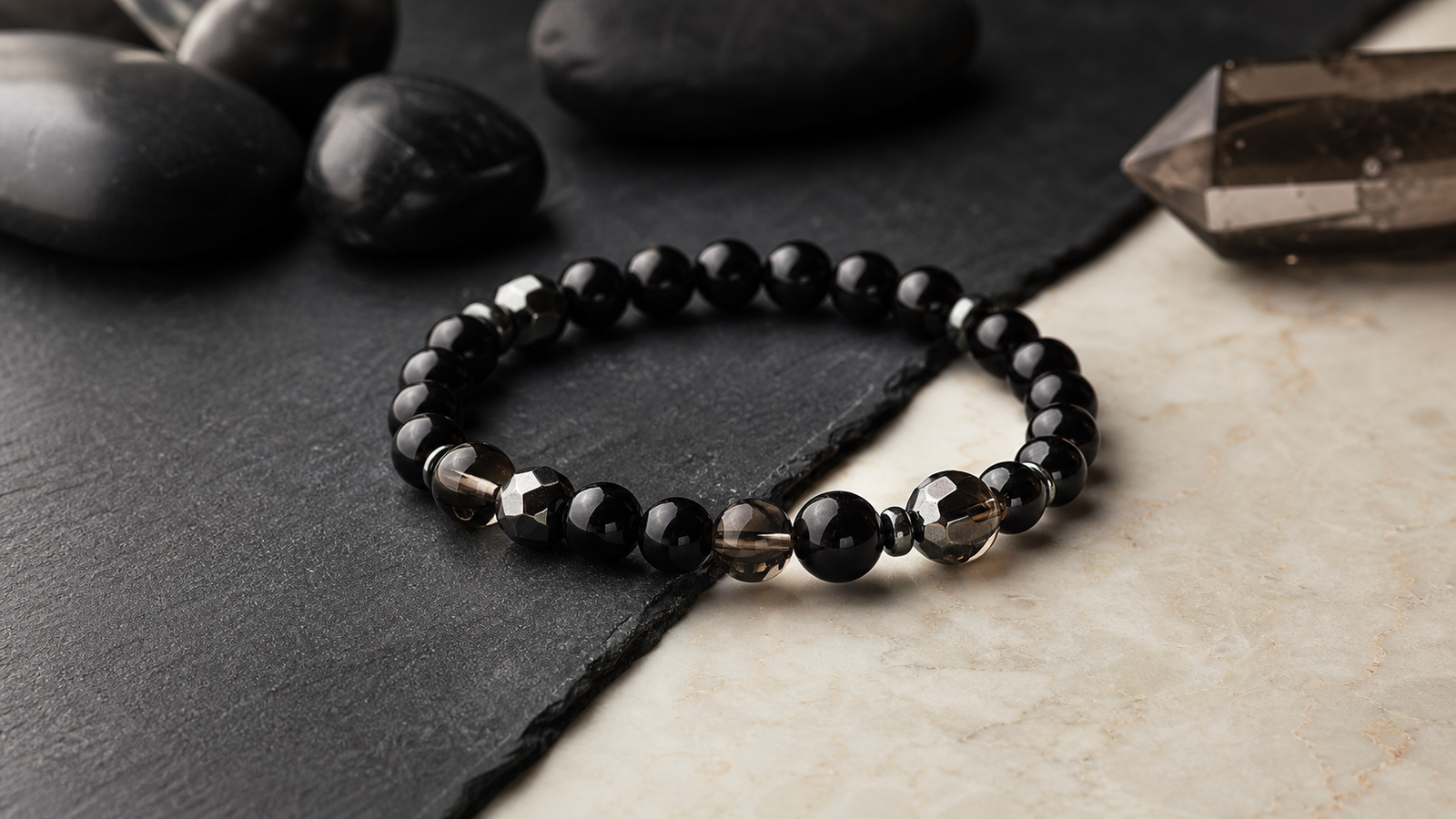
How to Put On a Crystal Bracelet Without Stretching It
Learning how to put on a crystal bracelet without stretching it is one of the simplest ways to help a handmade elastic design last longer. A stretch bracelet is convenient, but its cord is a working component: pulling it wide, snapping it over the hand, and exposing it to water or chemicals can shorten its useful life. A slower, gentler routine protects both the elastic and the natural gemstone beads.
Roll the bracelet over your hand
Hold the bracelet with both hands and guide it over the fingers in a rolling motion. Let the elastic open only as much as needed, then ease it onto the wrist rather than flicking it into place. This avoids a sudden pull at the knot and spreads tension more evenly. Take it off in the same controlled way. If a bracelet is uncomfortably tight, do not force it: measure your wrist and consider a resize or a custom fit instead.
Keep elastic and beads in good condition
Remove a stretch bracelet before showering, swimming, sleeping, sports, cleaning, or applying fragrance and lotion. Wipe it gently after wear, store it flat in a pouch, and avoid hanging it from a hook where the cord can stay under tension. Check for gaps between beads, a tired knot, fraying, or discoloration. These are signals to repair before a break sends beads rolling across the floor.
A handmade repair-minded approach
Natural beads differ in hole size, weight, and surface hardness, so elastic selection and fit should be considered together. Audday’s handmade process values careful assembly, material balance, and an honest match between a bracelet and its daily use. For stone context, read the gemstone material analysis page; for a guided fit and color story, visit the custom energy interpretation page and design a custom bracelet. You can also browse the bracelet collection for a finished starting point.
Frequently asked questions
Should I stretch my bracelet before wearing it?
No. Roll it over your hand gently and avoid opening the elastic wider than necessary.
Can water damage elastic cord?
Long water exposure can contribute to wear, so remove stretch bracelets before showering or swimming.
What if my bracelet already feels loose?
Inspect it and arrange a restring before the elastic fails.
Begin with a safe fit
Learning how to put on a crystal bracelet without stretching it protects both the jewelry and the wearer. Start with a clean, dry surface and make sure the bracelet is the right size before forcing it over the hand. Stretch bracelets need enough ease to pass over the widest part of the hand, but they should not be pulled to their maximum length every time. Adjustable and clasp bracelets should be opened fully before placement. A slow, supported motion is safer than twisting the strand or dragging it across the skin.
Inspect before wear
Inspect the bracelet before wearing it. Look for thinning elastic, loose knots, bent clasps, chipped beads, sharp hole edges, or a spacer that has shifted. If anything feels unusual, stop and ask the maker about repair. Do not test an elastic cord by pulling it wide. A bracelet that has already become loose may break when you stretch it again. Keep the design ID and bead list for a custom piece so replacement or restringing can preserve the original color balance and bead order.
Place a stretch bracelet
For a stretch bracelet, relax the hand and bring the fingers together rather than spreading them. Use the other hand to guide the bracelet over the knuckles gradually. Support the beads with your palm and avoid pulling from one single section. Once the bracelet reaches the wrist, release it gently and rotate it into position. Do not use a sharp fingernail to push a bead or knot into place. If the opening feels tight, the design may need a larger size or a different construction.
Use adjustable and clasp closures
For an adjustable cord bracelet, loosen the slider or closure before placing it over the hand. Hold the focal section while guiding the cord so the knot does not scrape the skin. Tighten it slowly after the bracelet is positioned, leaving enough room for comfortable movement. Check that the tail ends do not catch on clothing. A clasp bracelet should be opened on a table or supported over the wrist, then closed until the mechanism clicks securely. Never force a clasp that is misaligned.
Check size and proportion
Wrist size, bead diameter, and construction interact. Six to eight millimeter beads are versatile for many adults, while larger beads can make a bracelet feel heavier and reduce flexibility. Spacers and focal beads change the circumference even when the bead count stays the same. Measure where the bracelet will sit and decide whether the fit should be close, relaxed, or suitable for stacking. If a surprise gift is being ordered, compare an existing bracelet rather than guessing from height or clothing size.
Understand natural material
Natural gemstones vary in hardness, surface character, inclusions, and hole quality. A small variation does not mean a bead is defective, but a sharp edge or crack should not face the skin. Audday’s Gemstone Material Analysis explains why natural materials need honest disclosure and material-specific care. If a bracelet combines several stones, ask whether their water, heat, and chemical tolerances are compatible before wearing it during chores or exercise.
Avoid product residue
Put the bracelet on after applying lotion, perfume, sunscreen, or hair products, and allow those products to absorb first. Oils and fragrance can collect on beads and metal findings. Remove the bracelet before swimming, showering, sauna use, harsh cleaning, or strenuous work unless the maker confirms that the materials and construction tolerate those conditions. A simple pouch near the sink, desk, or gym bag makes removal easier and reduces accidental drops.
Do not twist or force
Avoid twisting a bracelet around the wrist to make it look tighter. Repeated torsion can fatigue elastic, loosen knots, and place uneven pressure on drilled holes. If you want a closer appearance, choose the correct circumference during design rather than adjusting the finished piece by force. For stacking, pair bracelets with similar movement and surface character. A sharp metal edge or rough bead can rub against a softer stone when two pieces move together.
Remove it gently
The right removal method is the reverse of the right placement method. Support a stretch bracelet with both hands and roll it over the hand without pulling one side. Open an adjustable closure fully, then slide it away from the wrist. Open a clasp before moving the bracelet over clothing. Do not sleep with a tight bracelet if the fit causes pressure, tingling, or irritation. Comfort is a useful signal that the size or construction should be reviewed.
Keep symbolism honest
A bracelet can carry personal symbolism without making unsupported promises. Birthstones, zodiac references, and intention words such as calm, focus, confidence, or protection may guide a design. They do not guarantee healing, luck, or financial results. Audday’s Energy Reading can be used as a reflective design prompt, while the physical bracelet should be chosen for comfort, appearance, and disclosed materials.
Share a complete custom brief
When a custom design is needed, share more than a color. Tell the maker your wrist measurement, preferred fit, bead diameter, construction preference, metal tone, daily routine, water exposure, and the reason for the bracelet. Audday’s Custom Bracelet process gives Liam the information needed to balance proportion and comfort. A clear brief reduces revisions and makes it easier to explain how the finished piece should be worn.
Care after wearing
Care after wearing is simple. Wipe the bracelet with a soft dry cloth, let it rest flat, and store it separately from sharp metal jewelry. If the material guidance allows a damp cloth, use very little water and dry immediately. Avoid bleach, alcohol, toothpaste, abrasive cleaners, prolonged soaking, and direct heat. Inspect the cord, clasp, and beads regularly. If the bracelet becomes loose, chipped, sharp, or visibly changed, stop wearing it and ask about repair.
Store it while traveling
Travelers should place the bracelet in a soft pouch rather than a loose pocket with keys or chargers. During flights, road trips, or moving days, avoid leaving it in a hot car or in direct sun. If the bracelet is a gift, include a short material list and care card so the recipient knows how to handle it. Documenting the bead order and design ID helps with future resizing or a matching piece.
Make wearing intentional
Putting on a bracelet slowly is a small ritual that protects a handmade object. Take a moment to check the fit, notice whether the beads feel comfortable, and consider the intention or memory the design represents. This reflective pause is optional and personal; it is not a substitute for medical or professional guidance. Practical care and honest symbolism can coexist. A bracelet can be meaningful while still being treated as jewelry that needs sensible handling.
Build a consistent habit
The best habit is consistency: inspect before wear, support the bracelet with both hands, avoid maximum stretching, remove it for water and harsh activity, and store it dry. If the fit is wrong, do not try to correct it by force. Ask for a resize or a different construction. Natural gemstones are individual, and handmade assembly deserves gentle handling. With these steps, a crystal bracelet can remain comfortable, attractive, and connected to the intention that made you choose it.
Frequently Asked Questions
How do I put on a stretch crystal bracelet safely?
Relax the hand, bring the fingers together, support the bracelet with both hands, and guide it over the knuckles without pulling one section to its limit.
Why should I avoid stretching a bracelet wide?
Repeated maximum stretching fatigues elastic, loosens knots, and can place uneven pressure on bead holes and finishes.
When should I remove a crystal bracelet?
Remove it before swimming, showering, sauna use, harsh cleaning, strenuous work, or any activity that exposes it to water, heat, chemicals, or impact.
What if the bracelet feels too tight?
Stop forcing it and ask about resizing or a different construction. The correct fit should pass over the hand comfortably and sit without pressure.
Teach the habit to a new wearer
If the bracelet is a gift, show the recipient how it opens or stretches before they wear it alone. Demonstrate the two-hand method and point out the closure, knot, and focal bead. Explain that natural stones can change slightly in appearance and that a soft wipe is safer than a household cleaner. Keep the care card with the pouch so the instructions are easy to find. If the recipient has a larger hand, swollen wrist, skin sensitivity, or difficulty with small clasps, ask the maker about an alternative construction instead of forcing the current size. A bracelet should feel comfortable during ordinary movement. It should not leave pressure marks, catch on clothing, or require repeated pulling to sit correctly. When the wearer knows how to put it on and remove it, the handmade design is more likely to stay intact for years.