

Crystal Bracelet Guides
How to Stack Crystal Bracelets: Color, Size, and Balance Tips

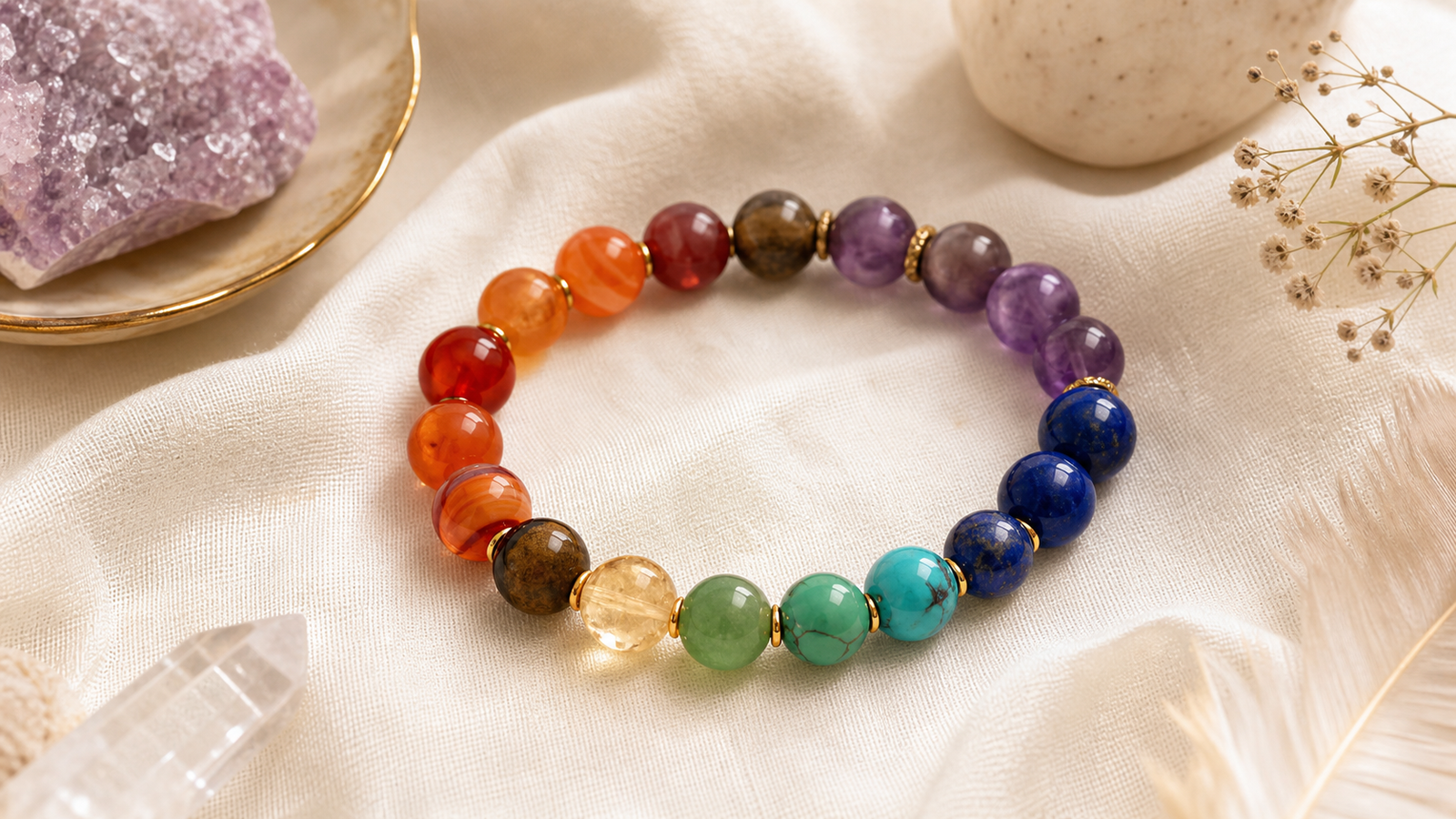
How to stack crystal bracelets is a question about proportion, color, movement, and comfort before it is a question about symbolism. The simplest reliable formula is one quiet anchor bracelet, one contrasting texture or color, and enough room for both pieces to move without pulling on the elastic. At Audday, Liam approaches a stack as a small handmade composition: natural beads bring individual character, while wrist fit and everyday wear decide whether the combination will actually be enjoyable.
How to stack crystal bracelets in three decisions
First choose the bracelet you would happily wear alone. That is your anchor. It may be a strand of smoky quartz, a pale blue agate design, or a neutral combination that already works with your wardrobe. Second choose the kind of difference you want to add: a smaller bead, a contrasting surface, or a restrained accent color. Third check the combined fit. Two beautiful strands that catch, pinch, or slide across the hand are not a successful stack. These three decisions are more useful than a rigid rule about which stone must sit next to which.
A starting stack does not need three or four bracelets. Two strands are easier to balance and make it possible to learn what you enjoy before adding more. Photograph the pair on the wrist in daylight and again beside your usual sleeve or watch. If one bracelet disappears visually, increase contrast in scale or texture. If the pair feels noisy, remove a color or allow one bracelet to be almost monochrome. Editing is part of design, not a failure to be adventurous.
Why the stacking idea is timely, and what the sources actually say
Jewelry-industry sources provide a useful style context, not proof that every customer wants the same arrangement. In an article published on October 14, 2026, Stuller described line bracelets as pieces that can be worn alone or layered and discussed personalized jewelry as part of its holiday assortment. A National Jeweler article dated September 23, 2026 also discussed layered looks and personalization in diamond jewelry. Those reports concern broader jewelry categories. Translating their styling ideas to natural gemstone bead bracelets is Audday’s design interpretation, not a reported sales statistic, a crystal-market forecast, or evidence of a therapeutic effect.
That distinction matters when you shop. A headline about a trend can inspire a silhouette, but it cannot determine whether an eight-millimeter bead feels comfortable on your wrist or whether a pale stone works with your clothing. Use the industry conversation to test ideas. Keep the final choice grounded in actual bead size, your usual activities, the surface finish of each strand, and the story you want to carry. A stack is personal precisely because those practical details differ from wearer to wearer.
Choose an anchor bracelet before adding accents
The anchor gives the eye a place to rest. It is commonly the strand with the clearest color identity, the largest beads, or the strongest personal association. If you already own a favorite bracelet, put it on first and examine why it works: perhaps the color suits your skin, the diameter sits comfortably under a cuff, or its natural variation feels interesting without looking busy. Design the second strand to support that quality. You do not need a matched set made from identical stones.
A dark anchor such as black onyx or smoky quartz can make a lighter bracelet more visible. A pale anchor can leave room for a single warm focal tone. If the anchor contains strong banding or sparkle, consider a calmer companion with smaller beads or a more uniform finish. The aim is hierarchy, not symmetry. When both strands demand equal attention, the stack can still work, but it requires more space and a deliberate color connection.
Balance bead diameter and total weight
Bead size changes both the appearance and the physical behavior of a stack. Two large-bead bracelets often occupy more wrist space, contact each other more frequently, and may push a watch or sleeve upward. A large strand beside a smaller one usually creates an easier scale relationship. Six-millimeter beads can read as a fine visual line, while eight- or ten-millimeter beads have more presence. These are styling observations, not universal fit guarantees; bead material, wrist size, construction, and bead count also matter.
Try the stack for a full ordinary hour before deciding that the fit is solved. Type, carry a bag, move a sleeve, and let the bracelets settle. Notice whether a heavy strand migrates below the lighter one or whether the elastic is stretched by repeated movement. If the stack feels bulky, reduce the number of strands, choose a smaller bead diameter for the companion, or use a single accent bead rather than a second full statement bracelet. A wearable design should not require constant adjustment.
Work with color families instead of matching every bead
A palette can connect different stones without forcing them to look identical. One method is a tonal stack: pale blue, blue-grey, and clear accents. Another is a warm-cool conversation: coppery or peach beads against slate or cream. A third is a neutral frame around one saturated hue. Start by naming the dominant color and one supporting color. If you cannot describe the palette in a short phrase, there may be more visual themes than the stack needs.
Natural gemstone beads are not perfectly repeatable color chips. An agate may have banding, quartz may show cloudiness or inclusions, and polished surfaces can reflect light differently. Check the whole strand rather than rejecting one bead for a small variation. In Audday’s handmade process, variation is arranged into a rhythm. We look at neighboring beads, focal points, and the transitions around the wrist so that an individual bead’s character contributes to the whole composition.
Compare polish, translucency, and texture
Color is only one design tool. A matte or subdued strand can calm a glossy bracelet. A translucent accent can make a dense opaque anchor feel lighter. Smooth round beads create a different rhythm from faceted beads, even when the colors are similar. Hold the bracelets together in soft daylight and view them from both above and from the side. The side view reveals thickness and whether the stack feels like two separate lines or one crowded band.
Texture also affects practical care. A prominent metal charm or sharp spacer can rub against beads or snag fabric. Different stone surfaces may show scratches differently, and a loosely fitted stack may create more contact. Ask whether the desired contrast could be achieved with color or diameter instead of a component that catches. If you choose metal details, inspect their edges and the place where they meet the elastic or cord. Comfort is as important as the photograph.
Leave room for sleeves, watches, and daily motion
If you wear a watch, decide whether the bracelet stack belongs on the same wrist. A watch and two gemstone strands can look intentional, but the beads should not scrape the case, press into the wrist bone, or obstruct the clasp. Try the watch with one slim bracelet first. If that works, add another only when there is enough room for natural movement. An opposite-wrist stack is often the simpler option for someone who types or works with their hands.
Clothing changes the perceived scale. A stack that looks minimal against bare skin may crowd a narrow shirt cuff; a loose sweater sleeve may frame it comfortably. Photograph your design in the clothes you actually wear to work or on weekends. Consider the tasks you do while wearing it. Remove gemstone bracelets before swimming, showering, vigorous exercise, or chemical cleaning. A stack should adapt to the day rather than become an obligation to wear in every setting.
Make meaning optional and specific
Some customers choose stones through birth months, zodiac references, family memories, or a personal intention. Those can be useful design prompts, but the meaning belongs to the person, not to a guaranteed effect of the mineral. A bracelet might remind you to speak kindly, mark a graduation, or recall a friend. Another person may select exactly the same stones because they like blue and grey together. Both are valid reasons to wear jewelry.
If you would like a reflective starting point, Audday’s energy reading can help you articulate colors, occasions, and the kind of reminder you want to carry. Treat it as a design conversation, not medical, financial, or protective advice. Then write one sentence describing your proposed stack. For example: “A dark everyday anchor with a pale accent that reminds me of a new chapter.” This short brief helps a maker choose materials without pretending to predict an outcome.
Stack one story, not several competing stories
Personalization becomes more powerful when it is selective. If one bracelet marks a birthday and another a long-distance friendship, you may want a shared palette or repeating bead scale that brings them together. If every strand contains a birthstone, charm, zodiac bead, initial, and focal crystal, the message can become hard to read. Decide which element is the headline and which is supporting detail. A third bracelet should add a new visual function, not repeat a message already clear in the first two.
This is particularly useful when planning a gift. You may know the recipient’s favorite color but not their wrist measurement or tolerance for heavier jewelry. A restrained two-bracelet set with a clear note explaining the connection is often more thoughtful than a maximal stack that assumes too much about their routine. Include material names and care instructions. If the fit is uncertain, discuss adjustable construction or an exchange/resize plan before ordering rather than hoping the elastic will compensate.
Build a balanced three-bracelet stack
Once a two-piece combination works, give the third strand a specific role. It can be the bridge between a light and dark color, a fine spacer between two larger bead lines, or a subtle echo of one focal tone. Set the three bracelets on a table in the order you plan to wear them. Then reverse the order and compare. Some combinations look better when the smallest strand sits next to the hand; others feel better when the heaviest strand is closest to the watch or sleeve.
Check the full circumference, not only the part visible in a product image. A bracelet rotates during the day. If a design relies on one focal bead remaining permanently upright, ask whether the piece should have a different construction or whether the visual story can survive rotation. Natural beads can vary, so a convincing stack should remain coherent even when the arrangement shifts slightly. That is one advantage of a restrained palette and repeated scale.
Measure fit for each bracelet separately
A stack is not automatically comfortable because each individual bracelet fits. Two strands can occupy different positions on the wrist and one may end up over the other. Measure the wrist where the pieces will sit, note whether you prefer a close or relaxed feel, and check the construction of each strand. Do not add an arbitrary amount to every measurement; bead diameter and elasticity affect the internal opening differently. Share the measurement and fit preference with the maker.
When ordering from Audday, describe both the individual size and the way the bracelets will be worn together. If one bracelet is intended to sit beside a watch, say so. If you expect to remove one strand most days, tell us which should still work alone. A handmade design brief is valuable because it lets us consider the actual use rather than merely copying a photograph. The result is a more reliable starting point for bead count, visual scale, and finish.
Inspect materials before committing to a custom stack
Ask what each bead is, how it has been represented, and which visible variations are normal. Natural stone should not be described with vague promises. The gemstone material analysis page explains why color, inclusions, transparency, and finish matter to design decisions. Compare that information with clear product photographs and an honest material list. A good purchase decision can include affection for the stone’s irregularity without confusing variation with poor workmanship.
Check the cord or elastic, knot finishing, bead-hole edges, and any spacer components. The heavier the stack, the more useful it is to understand how each bracelet is constructed and maintained. A bead that feels rough at the hole may wear against the cord. A very tight stack may strain the construction. If a material is unfamiliar, ask for the exact name and care notes instead of relying on a metaphysical label. Transparency supports better styling and longer use.
Care for a stack as separate pieces
Remove the bracelets individually rather than pulling the whole stack over the hand at once. Roll a stretch bracelet gently across the hand; do not extend the elastic far beyond its normal opening. After wearing, wipe each strand with a soft dry cloth and allow any moisture to dissipate before placing it in a pouch. Store bracelets separately so hard beads and metal findings do not repeatedly rub against softer or polished surfaces.
Inspect the cord periodically for fraying, stretching, or a gap at the knot. If one bracelet needs repair, stop stacking it until the construction is secure. Avoid long soaking, harsh cleaning products, direct heat, and activities that repeatedly strike the beads. Care is not an abstract rule: it is part of making a personal design last in real life. If you are unsure about a particular material, use the most conservative cleaning method and ask the maker for material-specific guidance.
How Audday turns a stack idea into a handmade design
Audday grew from the colored-gemstone craft environment of Haifeng, Shanwei, Guangdong. Our approach starts with natural material character, then moves to bead selection, visual rhythm, wrist fit, and a design story that the wearer actually wants. We do not claim that a crystal stack can cure illness, secure wealth, protect someone from harm, or guarantee emotional change. The value lies in careful making, honest disclosure, personal choice, and a finished piece that fits the user’s life.
For a custom order, send the wrist measurement, usual clothing and watch habits, desired bead scale, color palette, preferred stone names, and any components you dislike. If you have an existing bracelet to complement, describe it or provide a clear photograph. Then use the custom bracelet design page to refine the stack. It can be one newly made companion for a bracelet you own, or a coordinated pair designed to work separately and together.
A practical stacking checklist
- Choose one anchor strand that looks good alone.
- Add contrast through one controlled variable: color, diameter, finish, or texture.
- Check the complete stack beside your watch and normal sleeves.
- Wear it for an ordinary hour before accepting the fit.
- Confirm actual stone names and construction details.
- Keep symbolic meaning personal rather than promising an effect.
- Store and care for each bracelet separately.
If the result feels unresolved, remove the least essential strand and try again. A successful stack does not need to advertise complexity. It should make the wearer feel that each choice has a reason, whether the reason is color, craft, memory, or simply comfort.
Frequently asked questions about stacking crystal bracelets
How many crystal bracelets should I stack?
Two are enough to establish contrast while keeping fit easy to test. Add a third only when it has a clear visual role and the combined weight remains comfortable.
Should stacked bracelets use the same bead size?
Not necessarily. A smaller-bead companion often creates useful scale contrast beside a larger anchor, but the right choice depends on wrist size, materials, and personal taste.
Can I stack a gemstone bracelet with a watch?
Yes, if there is room for movement and the beads do not press against or repeatedly strike the watch. Try one slim strand first and consider the opposite wrist for a bulkier combination.
Do stone meanings determine which bracelets may be stacked?
No. Symbolism is a personal or cultural design prompt, not a rule or guaranteed outcome. Color, material disclosure, fit, and everyday comfort should guide the final choice.
How do I request a custom stack?
Share your wrist measurement, preferred fit, palette, bead size, existing jewelry, and occasion through Audday’s custom bracelet page. Explain which strand should work alone as well as in the set.
Editorial note, October 17, 2026: the dated Stuller and National Jeweler articles above document broader layering and personalization coverage. The gemstone stacking guidance is Audday’s practical design interpretation, not a measured market forecast.