

Crystal Bracelet Guides
How to Wear a Crystal Bracelet With a Watch: Balance, Fit, and Care

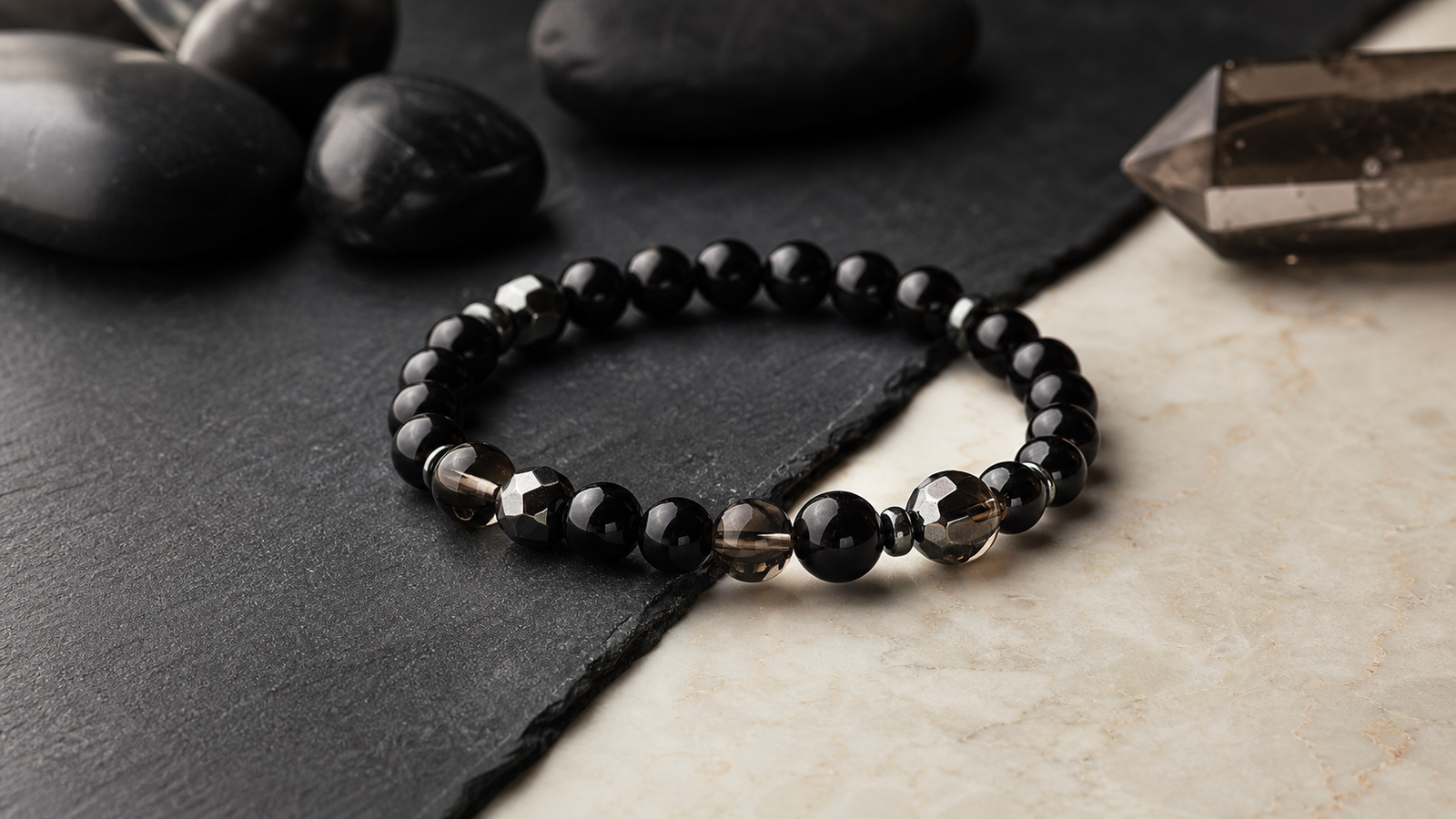
How to Wear a Crystal Bracelet With a Watch: Balance, Fit, and Care
Knowing how to wear a crystal bracelet with a watch comes down to proportion, comfort, and a little space between materials. A natural gemstone bracelet can make a watch feel more personal, but hard beads should not constantly press against a metal case, crystal, or clasp. A balanced stack protects the jewelry, keeps the wrist comfortable, and lets each piece look intentional rather than crowded.
Choose a bead size that works beside your watch
Start by looking at the watch case and strap. A slim watch often pairs easily with smaller 6mm or 8mm beads; a larger field or sport watch may support a more substantial bracelet if the colors stay restrained. Try one bracelet first, then add layers only when the wrist can move freely. You can wear the bracelet and watch on the same wrist or separate wrists—there is no rule that matters more than comfort and wear protection.
Prevent rubbing and stretching
Leave a small visual gap between the bracelet and watch so beads do not rub the case all day. Roll elastic bracelets gently over your hand rather than stretching them wide, and take them off before gym sessions, swimming, cleaning, or sleep. Natural gemstone beads and elastic cord respond differently to friction, water, and chemicals, so an everyday stack needs occasional inspection for gaps, loose cord, or surface wear.
Plan a handmade stack around your routine
Audday’s makers build custom bracelets by balancing natural-stone color, bead size, and fit by hand, informed by the colored-gemstone craft tradition of Haifeng, Shanwei, Guangdong. Use the gemstone material analysis page to compare bead materials, visit the custom energy interpretation page for a personal design prompt, and create a custom bracelet for a watch-friendly fit. You can also explore the bracelet collection for a ready-made starting point.
Frequently asked questions
Can a gemstone bracelet scratch my watch?
It can if hard beads repeatedly rub against the case, so keep a small gap and check the fit.
Should I stack several bracelets beside a watch?
Start with one comfortable bracelet; add only what leaves free movement and does not crowd the watch.
Is there a correct wrist for a watch stack?
No. Choose the wrist and arrangement that feel comfortable and reduce rubbing.
Start with proportion
Wearing a crystal bracelet with a watch can look balanced when scale, metal tone, and movement are considered together. The goal is not to hide one accessory behind the other; it is to create a comfortable combination that works with ordinary clothing. Start with the watch case, strap, wrist size, and the bracelet’s bead diameter. A simple design may sit beside a daily watch, while a larger focal bracelet may work better on the opposite wrist. Test the arrangement before wearing it for a full day.
Check movement
Begin with proportion. A slim watch often pairs well with smaller beads or a single restrained accent. A large sports or dive watch can support medium beads, but a heavy bracelet may compete with the case or catch on the strap. Measure both objects in your hand and check how they move when you type, drive, or rest your wrist on a desk. Visual balance should not come at the cost of pressure, pinching, or restricted movement.
Use metal tone
Metal tone offers a useful starting point. Silver, steel, and black watch details can work with gray, blue, black, clear, and green stones. Gold or brass can pair with cream, brown, honey, red, and warm green. Rose-gold details may work with pink, peach, lavender, or neutral beads. Contrast can be intentional, so do not force an identical match. Choose one shared element—tone, texture, or accent color—to make the combination feel deliberate.
Understand natural variation
Natural gemstones vary in banding, inclusions, translucency, saturation, and surface character. Ask whether the stone is natural, treated, reconstructed, or synthetic and what care it requires. Audday’s Gemstone Material Analysis explains why accurate disclosure is important when a bracelet is selected to complement a watch. Natural variation can make the pairing more individual, but the surface should still be safe and the construction secure.
Plan the fit
Fit is especially important when two accessories share one wrist. Measure where the bracelet will sit and decide whether it should be close, relaxed, or separated from the watch by a small gap. Stretch bracelets need enough ease to pass over the hand without excessive tension. Adjustable and clasp designs can create a more controlled position. If the bracelet slides into the watch crown or clasp, change the fit or wear it on the opposite wrist rather than forcing the combination.
Consider surface texture
Surface texture affects friction. Matte beads may sit quietly beside a polished case, while faceted or glossy beads can echo the light on a metal bezel. Rough, sharp, or heavily textured materials can scratch a watch or catch on a fabric strap. Place a soft divider between accessories during storage and inspect both surfaces after wear. If the watch is valuable or delicate, choose a smoother bracelet and avoid repeated contact with the case.
Match the strap
Consider the strap material. Leather can absorb oils, moisture, and fragrance from a nearby bracelet, while fabric straps may catch on rough beads. Metal bracelets can create noise and friction when combined with hard beads. Silicone straps are flexible but can trap sweat. Remove the bracelet and watch before swimming, showering, sauna use, harsh cleaning, or strenuous work unless the maker confirms compatibility. Keeping accessories dry protects both the bracelet and the watch.
Build a focused palette
A focused palette usually looks more refined than a collection of every symbolic stone. Choose a base tone that relates to the watch, a supporting color from the outfit, and one accent. Blue with steel can feel clean; brown with gold can feel warm; black with a small green or metallic detail can feel modern. Test the pairing with several outfits and under natural light. A bracelet should work on ordinary days, not only in a product photograph.
Use symbolism responsibly
Symbolism can remain personal. Birthstones, zodiac associations, and intention words such as focus, calm, confidence, or protection may guide a design. They do not guarantee healing, safety, or financial success. Audday’s Energy Reading can serve as a reflective prompt, while material and construction should be chosen for comfort and care. A watch tracks time; a bracelet can remind you how you want to use it.
Choose ready-made or custom
Ready-made and custom options suit different pairing needs. Ready-made works when the watch, wrist, and palette are already clear. Custom is useful when you need a precise bead diameter, a particular metal tone, or a bracelet that sits at a defined distance from the watch. Audday’s Custom Bracelet process lets you share watch style, wrist measurement, colors, routine, and care conditions with Liam. Custom does not promise a spiritual result; it provides a more specific design brief.
Store accessories separately
Plan storage before the first wear. Do not place a hard gemstone bracelet loose against a watch crystal, polished case, or leather strap. Use separate pouches or a soft divider. Wipe the bracelet with a dry cloth after wear and allow it to rest flat. Keep both accessories away from direct heat, prolonged sunlight, harsh chemicals, and humid bathrooms. Regular inspection can reveal a loose clasp, stretched elastic, chipped bead, or damaged strap before the pieces are worn together again.
Respect the wearer’s habits
If the bracelet is a gift for someone who wears a watch daily, ask about comfort without revealing the entire surprise. Some people prefer accessories on opposite wrists, while others enjoy a coordinated stack. The recipient’s habits are more useful than a generic styling rule. A short note can explain the shared color or texture and invite them to adjust the placement. The best combination feels natural to the wearer rather than imposed by the giver.
Use a complete checklist
Before ordering, confirm watch size, strap material, wrist measurement, bracelet diameter, construction, metal tone, palette, surface texture, care conditions, delivery date, and repair options. Save the design ID, bead list, and final photo. If a future replacement uses natural stone, the color may vary slightly. A complete brief helps the maker preserve the visual rhythm while keeping the bracelet comfortable beside the watch.
Audday’s handmade approach
Audday combines natural gemstone selection, color planning, and handmade assembly. Liam reviews proportion, comfort, material variation, and construction before finalizing a bracelet intended to work with a real routine. The result is a wearable accessory and personal reminder, not a guaranteed energy treatment. Honest care guidance protects the bracelet, the watch, and the trust behind the purchase.
Make the pairing last
The best watch-and-bracelet pairing is one that remains comfortable after several hours. Keep enough space for movement, protect surfaces from friction, choose a focused palette, and remove both accessories when water or harsh activity makes them vulnerable. A thoughtful combination can make time and intention feel connected without turning either object into a promise it cannot keep.
Frequently Asked Questions
Can I wear a crystal bracelet beside my watch?
Yes, when the bracelet fits comfortably, surfaces do not rub dangerously, and the materials suit the routine. A small gap or opposite wrist may work better.
What bead size works with a watch?
Smaller or medium beads are versatile, but watch size, wrist circumference, strap material, and personal style should determine the final diameter.
Can a bracelet scratch my watch?
Rough, sharp, or hard beads can create friction. Use smooth materials, separate storage, and a soft divider, especially with valuable watches.
Should the bracelet match the watch metal?
Matching is optional. One shared tone, texture, or accent color can make a contrast look intentional without requiring an identical match.
Test the combination before a full day
Wear the watch and bracelet together at home for fifteen or twenty minutes before taking them to work, travel, or an event. Notice whether the bracelet moves toward the watch crown, catches on the strap, or feels heavy when your wrist bends. Check the case and bracelet beads afterward for new marks or rough contact. If the accessories compete visually, remove one accent color or move the bracelet to the opposite wrist. If the fit is too tight, do not pull the elastic farther; request a resize or choose an adjustable construction. If a leather strap absorbs moisture from the bracelet, separate them and let both pieces dry naturally. Keep a soft divider in the storage pouch so the hard beads do not rub against the watch crystal. This short trial turns a styling idea into a practical decision and helps the wearer enjoy the combination without constant adjustment.