
Crystal Bracelet Guides
Personalized Bracelets: How to Choose a Meaningful Design

Personalized Bracelets: How to Choose a Meaningful Design
Personalized bracelets are more than a way to add color to an outfit. They can mark a birthday, carry a private intention, or become a thoughtful gift chosen around someone’s personality and story. If you are comparing natural gemstones, birthstone jewelry, zodiac designs, or custom bead combinations, personalization helps you move from a generic accessory to a bracelet that feels connected to you.
As a crystal artisan at Audday, I create natural gemstone jewelry inspired by astrology, numerology, and traditional crystal symbolism. Audday was born in Haifeng, Shanwei, Guangdong, China, a region connected to a large colored gemstone production and processing network. This background gives us a close view of material selection, polishing, bead quality, and handmade assembly.
What Makes a Bracelet Truly Personalized?
A personalized bracelet can be designed around several details: your birth date, zodiac sign, favorite colors, wrist size, preferred bead diameter, style, and the intention you want the piece to represent. Some customers want protection symbolism, while others prefer a bracelet connected with confidence, abundance, love, calm, or spiritual reflection.
The strongest design usually combines a clear personal reason with practical comfort. A bracelet that looks beautiful but feels too heavy or tight will not become part of your daily routine. Start with your wrist measurement and choose stones that suit your wardrobe and lifestyle.
Choose Your Bracelet by Intention
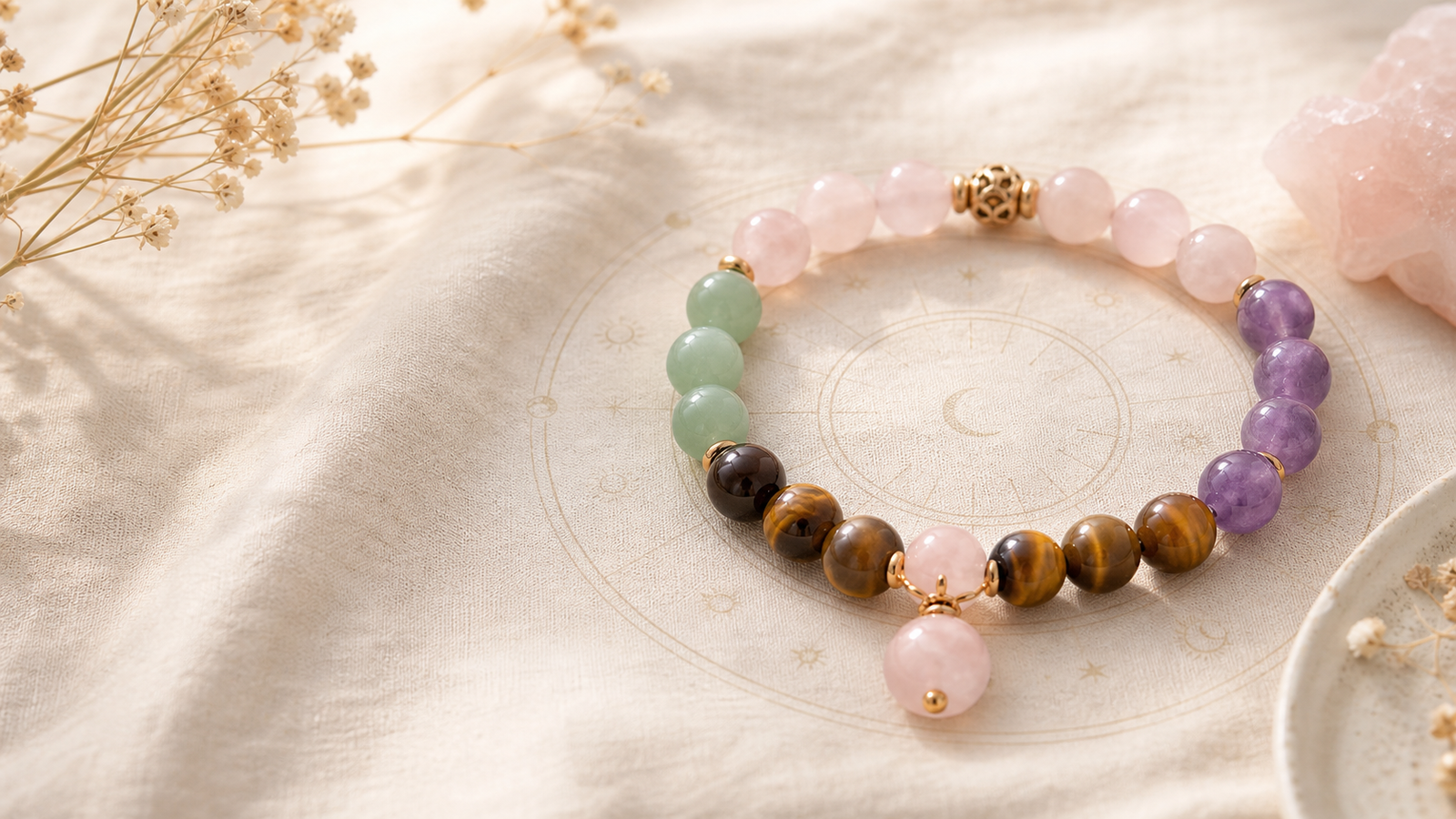
- Protection and grounding: black obsidian and smoky tones are often chosen for boundary and grounding symbolism.
- Confidence and action: tiger eye and warm earth colors are commonly associated with courage and focused movement.
- Love and compassion: rose quartz and soft pink tones are popular for emotional warmth and self-care symbolism.
- Abundance: citrine, jade, and golden tones are often used in prosperity-inspired designs.
- Calm and reflection: amethyst, aquamarine, and cool colors can suit a quieter personal ritual.
These associations are spiritual and symbolic rather than guaranteed effects. Your own response to a stone, its texture, and its color is an important part of the selection process.
Use Your Birthday or Zodiac Sign as a Starting Point
Birthday and zodiac information can add a personal story to a bracelet. You might select a birthstone by month, choose colors associated with your zodiac element, or use numerology as a reflective tool. There is no single universally correct stone, so the goal is to create a design that feels relevant rather than rigid.
For a more personalized starting point, visit Audday’s custom energy interpretation page. You can use the result as inspiration, then continue to Design Your Custom Energy Bracelet Now.
Personalized Bracelet Details to Confirm Before Ordering
- Measure your wrist and select a comfortable finished size.
- Choose bead size based on your preferred visual weight.
- Decide whether you want one main gemstone or a balanced combination.
- Confirm whether the bracelet is for daily wear, gifting, or a special occasion.
- Review the natural variation expected in color, inclusions, and texture.
Frequently Asked Questions
Are personalized bracelets good gifts?
Yes. A bracelet connected with a birth date, intention, favorite color, or personal milestone can feel more thoughtful than a generic accessory.
Can I combine several gemstones?
Yes. Many designs combine two or three stones according to color, symbolism, or a shared intention.
Are crystal bracelet meanings scientifically proven?
Crystal meanings are spiritual and symbolic traditions. They should not be presented as medical, psychological, or financial treatment.
Personalization works best when it joins meaning with comfort, craftsmanship, and a style you genuinely want to wear. Audday’s natural gemstone bracelets are designed to make that process feel considered and personal.
Disclaimer: Audday’s crystal, chakra, astrology, numerology, and energy-related content is for personal expression, cultural interest, and entertainment. It is not professional advice.
Read the Gemstone Material Analysis before choosing bead size, finish, inclusions, and natural stone character. For a made-to-order result, visit the Custom Bracelet page.
Begin with the wearer
A personalized bracelet should begin with the person who will wear it, not with a generic list of stones. Consider daily clothing, preferred metals, wrist comfort, and whether the piece will be worn alone or layered. The most useful design brief combines one clear intention with practical information such as bead diameter, stretch or adjustable construction, and the occasions when the bracelet will be used. This approach keeps personalization meaningful while preventing a crowded combination of colors and symbols.
Read existing jewelry
Start by observing existing jewelry. Warm gold findings often pair naturally with honey, cream, brown, peach, and red tones, while silver or steel details can support blue, gray, green, black, and clear stones. This is not a strict rule; contrast can be beautiful when it is deliberate. Notice the visual scale she or he already chooses. A person who wears delicate chains may prefer 4–6 mm beads, while someone who likes bold rings may enjoy 8–10 mm focal beads balanced by smaller accents.
Build a personal palette
Color is one of the fastest ways to make a custom bracelet feel personal. Select a base color that the wearer already owns, then add one supporting tone and one small accent. A calm blue and neutral gray palette can feel refined for work. Green with warm brown can suggest an outdoors-inspired style. Pink with clear or cream accents can feel gentle without becoming overly romantic. Black, smoky, and metallic tones can create a modern unisex direction. The palette should remain wearable after the special occasion passes.
Use symbolism responsibly
Symbolic meanings can help you tell a story, but they should not be presented as guarantees. Birthstones, zodiac associations, cultural traditions, and intention words are creative references that different people interpret in different ways. A personalized bracelet may remind someone to pause, focus, celebrate, or stay connected to a goal. It does not replace medical, psychological, legal, or financial advice. Honest language protects trust and leaves room for the wearer’s own meaning.
Understand natural variation
Natural gemstones show variation in banding, inclusions, translucency, and saturation. A bracelet assembled from natural material will not look exactly like a digital sample. Those differences can make each piece individual, but buyers should know what range to expect. Ask whether a listing identifies natural, treated, reconstructed, or synthetic material. Audday’s process considers color balance and surface character while explaining that natural variation is part of the material rather than a promise of perfection.
Plan the fit
Fit is as important as appearance. Measure the wrist where the bracelet will sit and decide whether the preferred feel is close, relaxed, or suitable for stacking. Stretch bracelets need enough ease to pass over the hand without excessive tension. Adjustable bracelets need a closure that is easy to use and comfortable against the skin. If you are ordering a surprise gift, compare a bracelet already owned by the recipient or ask a trusted friend for a measurement instead of guessing from height or clothing size.
Match the daily routine
Think about the wearer’s routine. A bracelet for office use may need a smooth finish, moderate weight, and colors that work with neutral clothing. A travel bracelet benefits from a secure construction and a design that is easy to store. A meditation or journaling piece may use tactile beads as a quiet reminder. For exercise, water exposure, or hands-on work, explain the conditions in advance so the maker can suggest materials and care practices that are realistic.
Create visual rhythm
A mixed-stone bracelet should have visual rhythm. Choose one focal material, one balancing material, and optional spacer beads rather than combining every stone associated with an intention. Repetition creates order: for example, a central focal bead can be mirrored by two smaller accents on each side. Metal spacers can separate colors and make the design easier to read. The finished piece should have a clear center and comfortable weight distribution so it looks intentional from every angle.
Choose proportions and texture
Personalization can also come from proportions rather than symbols. A bracelet with mostly small beads and one larger focal bead feels different from a uniform row of large beads. Matte surfaces feel quieter and more tactile; polished surfaces reflect more light. Faceted beads can add sparkle, while round beads create a softer rhythm. Describe which visual quality matters most to you when requesting a custom design so the maker can translate your preference into materials and construction.
Write the gift story
For a meaningful gift, write a short design note before choosing stones. Explain the quality you admire, the memory you share, or the new chapter you want to celebrate. Then select colors that support that message. The note can be more important than a long explanation of mineral symbolism because it connects the object to a real relationship. A custom bracelet works best when the recipient can understand why it was chosen and can also imagine wearing it with existing clothes.
Compare purchase paths
Compare ready-made and custom options honestly. Ready-made jewelry is efficient when the size, palette, and style are already clear. Custom jewelry is helpful when the wearer has particular fit requirements, a specific color story, or a personal occasion that deserves a one-of-a-kind combination. Custom does not automatically mean better quality; it means the design brief is more involved. Ask about revisions, production timing, material disclosure, and care before placing an order.
Audday’s handmade approach
Audday combines natural gemstone selection with handmade assembly and international e-commerce. Liam’s design approach starts with intention, then checks color, bead scale, comfort, and construction. Customers can share preferred materials, wrist size, style references, and the story behind the request. The result is meant to be an attractive accessory and a personal reminder, not a guaranteed energy treatment. Clear expectations make the custom process more enjoyable for both maker and wearer.
Plan realistic care
Care instructions should be part of the purchase decision. Keep gemstone jewelry away from prolonged soaking, harsh cleaners, extreme heat, and hard impact. Wipe it with a soft cloth and store it separately from sharp metal pieces. Inspect elastic cord, clasps, and knots from time to time. If the bracelet becomes loose or shows visible wear, stop stretching it and ask about restringing. Responsible care extends the useful life of the design and protects the story attached to it.
Use a final checklist
Use a final design checklist before approval: intended wearer, occasion, color direction, preferred metal, bead diameter, wrist measurement, construction type, material disclosure, care needs, delivery date, and gift message. If one of these is unknown, mark it as a question for the maker. A short, complete brief reduces revisions and makes the final result more predictable without removing the creative freedom that makes personalization valuable.
What makes personalization work
The best personalized bracelet is one that feels natural in the wearer’s life. Let personal style lead, use symbolism as a layer of meaning, and make practical fit decisions before focusing on decorative details. When you combine a clear story with honest material information and comfortable construction, the bracelet can remain useful long after the original occasion. Explore Audday’s Custom Bracelet process, review the Gemstone Material Analysis, or begin with an Energy Reading as a reflective design prompt.
Frequently Asked Questions
How do I choose a personalized bracelet style?
Start with existing jewelry, favorite colors, wrist comfort, bead size, and the occasion. Use one clear story instead of combining every possible symbol.
Are natural gemstone colors identical?
No. Natural stones can vary in banding, inclusions, translucency, and saturation. A responsible listing explains expected variation.
Can a personalized bracelet guarantee healing or luck?
No. Gemstone meanings are symbolic or cultural references, not guaranteed medical, financial, or supernatural outcomes.
What information should I provide for a custom order?
Share the intention, colors, materials, bead size, wrist measurement, occasion, care conditions, and delivery date.
Make the decision easy
Before you approve a design, imagine wearing it on an ordinary day rather than only in a product photograph. Check that the colors work with your coat, sweater, watch, or other bracelets. Consider how the piece feels when typing, driving, or resting your hand on a desk. If the bracelet is a gift, ask whether the recipient prefers subtle jewelry or a visible statement. These small observations turn a beautiful idea into a practical choice. Save the final color palette, bead sizes, and care notes with your order confirmation so future repairs or matching pieces are easier. A thoughtful maker welcomes questions about sourcing, construction, timing, and revisions. That conversation is part of personalization: it helps you understand what you are buying and gives the finished bracelet a clear place in the wearer’s routine. Audday documents each custom brief so Liam can balance the original intention with comfort, proportion, and the character of natural stone.