

Crystal Bracelet Guides
Blue Lace Agate Bracelet Meaning: Soft Blue Bands, Style, and Personal Symbolism

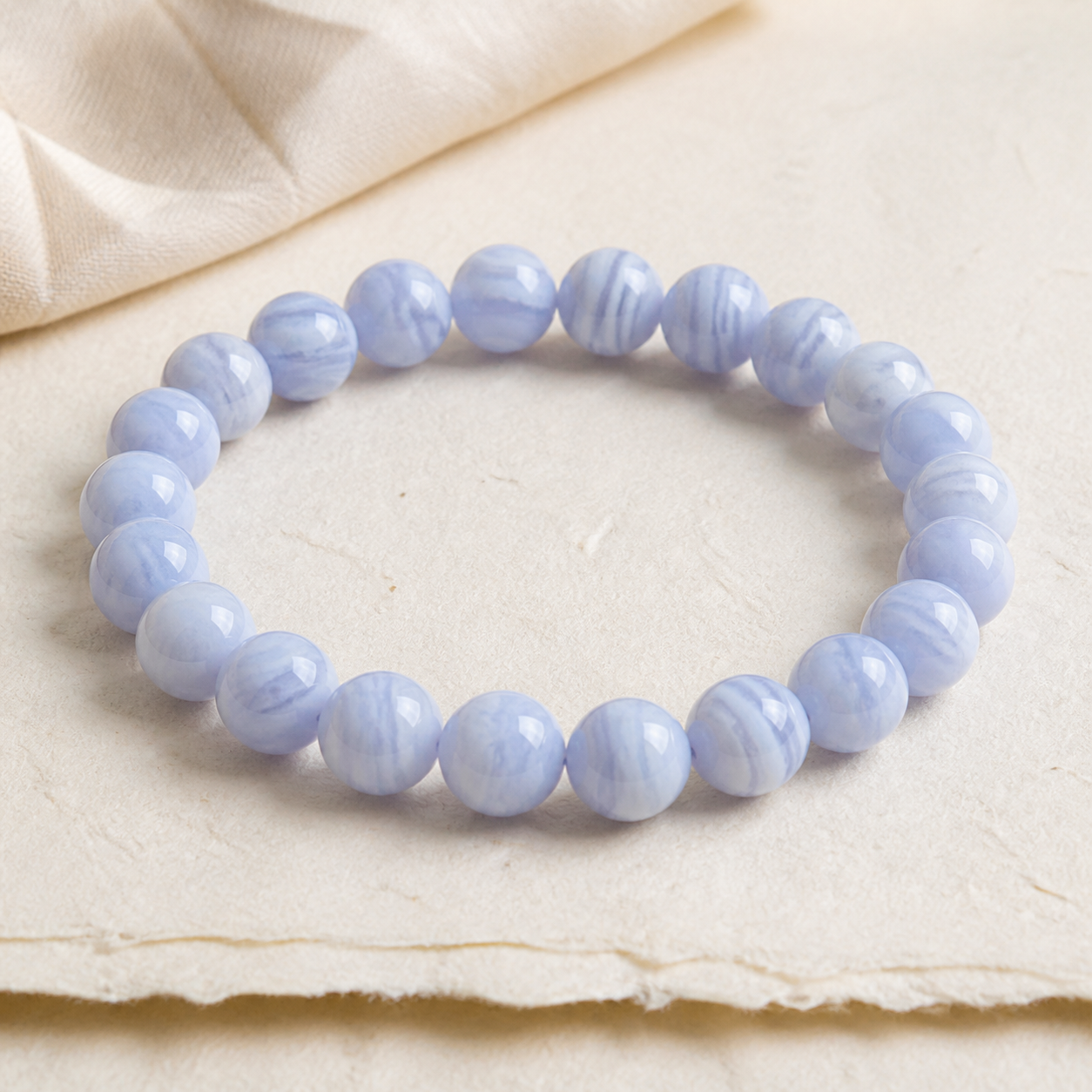
Blue lace agate bracelet meaning often starts with the stone’s pale blue and white banding. The gentle color can make a bracelet feel calm, airy, and easy to wear with denim, grey, cream, or silver-toned jewelry. Some people choose it as a private reminder to pause before speaking or to mark a quieter season; others simply like the soft natural pattern. At Audday, symbolism is optional personal language, never a promise about health, relationships, protection, luck, or an outcome.
How blue lace agate looks in a bracelet
Blue lace agate can range from misty sky blue to a cooler blue-grey, with white, cream, or translucent lines that vary bead by bead. This variation is part of natural material character. A smaller 6 mm bracelet can read like a subtle everyday accent, while 8 mm or 10 mm beads make the banding easier to notice. Select a strand for its overall palette rather than expecting identical beads, and keep space between other patterned pieces so the stone remains the focus.
Build a thoughtful natural-stone brief
Audday’s gemstone material analysis page explains the visual variation found in natural gemstone beads. Use the custom energy interpretation page to note wrist fit, favorite metal tone, and the occasion behind the piece. Then create a custom bracelet with blue lace agate as a single-stone design or paired with restrained clear and grey accents. This approach gives the handmade maker a clear starting point while leaving room for genuine stone character.
Handmade detail and simple care
Audday makers hand-select and string natural gemstone beads, informed by the colored-gemstone craft tradition of Haifeng, Shanwei, Guangdong. Browse the bracelet collection for ready-made inspiration before refining a custom design. Remove stretch jewelry before showering, swimming, exercise, or chemical cleaning; wipe it with a soft cloth and store it dry in a pouch. A color story can hold personal meaning, but it does not replace professional support or guarantee a result.
Frequently asked questions
What does a blue lace agate bracelet mean?
It can be a personal symbol connected with its soft color, a calm routine, or an important memory.
Will every blue lace agate bead look identical?
No. Natural banding, clarity, and blue tone can vary across a bracelet.
Can blue lace agate be used in a custom bracelet?
Yes. A brief can specify size, fit, preferred blue tone, and companion colors.
Practical questions to ask before ordering
A useful article should help a reader make a decision, not only describe a mood. Before ordering, check the exact bead diameter, approximate wrist size, closure or elastic construction, finish, and expected natural variation. If the page is about a gift, confirm the occasion and the recipient’s existing style. If it is about personal intention, decide whether the bracelet will be worn daily, layered occasionally, or kept for a specific ritual. These details affect the best material and proportion more than a dramatic description alone.
Ask how the bracelet should be stored, whether water and chemicals should be avoided, and what to do if elastic becomes loose. A responsible maker should explain that natural stones can show differences from photographs. Those differences can include lighter or darker areas, inclusions, banding, cloudy sections, tiny surface marks, and variations in polish. Such details are part of natural material character. They should be described clearly so the customer knows what to expect.
How to make the design feel intentional
Start with one visual anchor. This may be a focal stone, a repeated color, a metal accent, or a contrast between light and dark beads. Add supporting materials only when they improve the overall rhythm. Too many competing colors can make a bracelet look accidental, while one thoughtful contrast can make the design feel complete. Consider the wearer’s skin tone, wardrobe, watch, rings, and whether they prefer quiet jewelry or expressive stacks.
For a custom order, prepare a short brief with the wearer, wrist measurement, bead size, main color, secondary colors, occasion, intention, budget, and preferred finish. Reference images are useful for mood, but they should not be treated as a promise of an identical copy. A handmade design translates the reference into available natural materials and a comfortable arrangement. Reviewing the brief before production reduces misunderstandings and creates a more transparent experience.
Everyday styling and care
Wear the bracelet where it can be seen without being exposed to unnecessary friction. Leave space between it and a watch or harder metal edge. Roll elastic jewelry gently over the hand rather than pulling one section repeatedly. Remove it before swimming, showering, intense exercise, sleeping, or household cleaning. Wipe the beads with a soft dry cloth and store the piece separately in a pouch or lined box.
Rotate jewelry instead of wearing one elastic strand through every activity. Check for gaps, fraying, weak tension, chipped beads, or a clasp that no longer closes securely. Early inspection can prevent a break and protects the small design decisions that make a handmade bracelet feel personal. If repair or restringing is needed, stop stretching the piece and seek maker or jeweler guidance.
Symbolism without exaggerated promises
Crystal and zodiac symbolism can be meaningful when it is presented as a personal language. A color can remind someone to pause. A birthstone can mark a birthday. A chakra palette can represent a personal reflection practice. A dark stone can become a reminder of boundaries, while a pink or green palette can recall care and connection. None of these associations should be presented as a guaranteed treatment, financial result, or prediction.
The most trustworthy description separates material facts from personal interpretation. Material facts include color, texture, bead size, finish, construction, and care. Interpretation belongs to the wearer and may change over time. This approach respects both the natural stone and the customer’s ability to decide what the bracelet means.
Final buying checklist
- Does the primary color suit the wearer’s wardrobe?
- Is the wrist measurement accurate and comfortable?
- Is the bead size appropriate for daily movement?
- Are natural variations and care needs explained?
- Does the bracelet have a clear construction and finishing description?
- Is the symbolism framed as personal meaning rather than certainty?
- Are the return, delivery, and support details easy to find?
- Would the wearer actually choose to put it on tomorrow?
A meaningful crystal bracelet is ultimately a relationship between material, design, and daily life. Let the stone provide character, let the color carry a story, and let the fit determine whether the piece becomes part of a real routine. Audday’s handmade approach begins with that practical balance and leaves room for the wearer’s own interpretation.
A considered choice lasts longer
Take a moment to compare the bracelet with the way you already dress and move through the day. A design that feels comfortable, proportionate, and easy to care for is more likely to become a genuine everyday companion. Read the material notes, ask for clarification when measurements are uncertain, and choose meaning that feels personal rather than prescribed. Audday treats each handmade piece as a small object of reflection: carefully selected natural stones, balanced color, and a finish intended to be worn often. This considered approach makes the purchase clearer, the gift more thoughtful, and the final bracelet more useful long after the first impression.
Read the color before assigning a meaning
The phrase blue lace agate bracelet meaning describes a relationship between material and the wearer’s own story. Begin with what you can actually observe: soft blue, milky white, banding, and the particular rhythm created when beads are placed next to one another. A customer may associate that palette with open conversation or a quieter daily routine, but the bracelet cannot create those outcomes on its own. At Audday, we keep the symbolism in the language of reflection and design instead of presenting it as a health, protection, or relationship guarantee.
Place the bracelet next to the clothing it will be worn with. Under warm indoor lighting, pale blue may appear greyer; in daylight, the bands may be easier to distinguish. Look at the whole strand rather than one enlarged product photo. If the recipient wears mostly black or navy, the soft color can be a visible accent. If they wear cream, pale denim, or silver, the bracelet can sit quietly within an existing palette. This is practical style guidance, not a claim about the stone changing the wearer’s mood.
Ask better questions about natural banding
Natural pattern is a reason to request clear photographs, not a reason to demand perfect repetition. Ask whether the actual strand has a consistent overall lightness, whether some beads are noticeably more translucent, and how much white or grey banding is present. Also ask whether the beads have been dyed or otherwise treated if that matters to your buying decision. A material description should make the answer plain. The gemstone material analysis guide gives a broader framework for evaluating disclosed material, inclusions, and finish.
Inspect the polish and the bead holes as carefully as the blue tone. A bead with attractive color can still feel uncomfortable if its surface catches on skin or its hole wears against a cord. For a handmade bracelet, ask how the strand is finished and whether the maker can adjust size. These questions are especially important for a gift because the person receiving it may not have chosen the diameter or fit. Honest craftsmanship is a better signal of suitability than a dramatic spiritual promise.
Design a blue lace agate bracelet for real routines
For a subtle office or everyday piece, smaller beads can make the blue banding a gentle line. If the wearer wants the pattern to be the focus, a larger bead may be appropriate, provided the weight and movement feel comfortable. An all-agate strand offers a clear material story. Clear or grey companion beads can introduce contrast without overpowering the bands. If you add a metal spacer, ask whether it might rub against neighboring stones or catch a cuff. The right combination depends on actual use.
A watch changes the design. A bracelet stacked beside a watch needs enough room that neither item strikes the other repeatedly. Consider wearing the agate on the opposite wrist or choosing a lighter single strand. If a customer wants two bracelets, make one the anchor and the other the quieter companion; the agate’s delicate pattern can be lost between several strong textures. Our stacking guide explains how to balance bead diameter, color, and comfort without treating the combination as an energetic formula.
Turn the idea into a useful custom brief
When requesting a handmade piece, provide a wrist measurement, preferred looseness, desired bead diameter, and a note about the blue tone you like. Explain whether the bracelet will be worn alone, with a watch, or as part of a stack. If the meaning is personal, describe it in one honest sentence: perhaps “a reminder to pause before an important conversation.” That helps the maker understand the intended feeling without claiming that the stone itself controls a conversation. Audday’s energy reading can be used as a reflective prompt, and the custom bracelet designer turns the practical preferences into a wearable plan.
We draw on the colored-gemstone craft environment of Haifeng, Shanwei, Guangdong, where material choice and hand assembly are everyday parts of making jewelry. In that context, each natural bead needs to be considered for its neighboring color, surface, and placement. A design is not improved by hiding every difference. It is improved by making the differences feel intentional across the full circle of the bracelet. That is why a clear brief and realistic expectations matter more than choosing a stone from a generic “benefits” list.
Care and gifting notes
Wipe the bracelet with a soft cloth after wear, keep it away from prolonged water exposure and cleaning chemicals, and store it separately from metal pieces that could scratch the polish. Remove stretch jewelry gently rather than pulling it wide over the hand. Check the elastic and knot area periodically. If the piece is a gift, include the stated stone name, a simple care note, and the reason you selected the color. The story belongs to your relationship with the recipient, not to an unverified medical or supernatural property.